
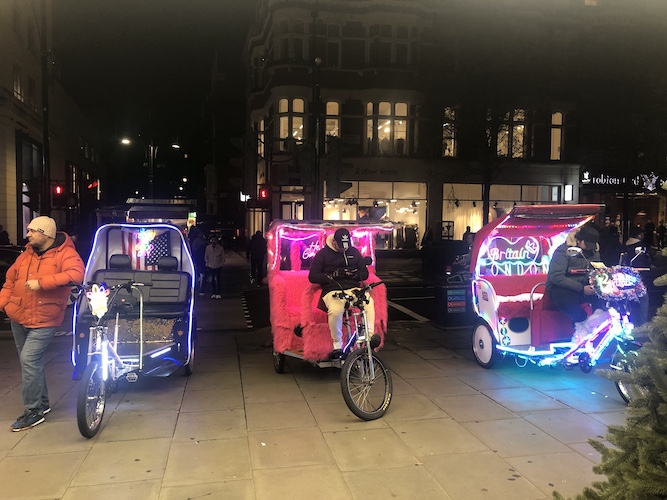
Covid traces seem almost erased from Oxford Street, with builders’ hoardings rather than boarded-up frontages breaking the retail line on each side. Amid its Christmas lights, the dead and deserted West End, that freak feature of the pandemic, is fading further into a surreal and troubled backroom of memory as shoppers and visitors return. Consumer business as usual is being restored. It wasn’t always usual, though.
Walking down “the nation’s high street” you can spoil your day by recalling the two centuries during which what was then called Tyburn Road formed part of the route along which prisoners were conveyed from Newgate prison to the hanging tree just yards from where Marble Arch now stands, drawing vast crowds of ghouls from near and far.
Back then, though, it was all but in the countryside. The West End as we now know it, though its roots lie in the aftermath of the Great Fire, wasn’t really formed until the early 19th Century, when the term was coined. It described affluent neighbourhoods west of Charing Cross lying conveniently close to power in Westminster and agreeably distant from the pong of the poor and industry in the east.
Culture, parks, hotels, places of entertainment and more followed the money. There were huge redevelopment schemes: for example, Regent Street went through radical alterations that saw colonnades put up by none other than John Nash pulled down and today’s sweeping grand design completed between the two world wars following government approval. The profitable churn of demolition and rebuild is not new.
Exploitation, street crime and that moral category labelled vice followed too. In his monumental London In The 20th Century, Jerry White describes a gleaming, glittering Edwardian West End that was “a playground for every class” and “the world’s largest flesh market” with its streets after dark “almost entirely given over to sexual commerce”. And Graham Greene in his 1936 short story Jubilee captures beautifully the man and the mood of Mayfair of the time with his character Mr Chalfont, an ageing gigolo who lived in a bedsit off Shepherd Market and “looked distinguished even in his pants”.
After the Second World War, Oxford Street revived its tradition for elaborate window displays, including, in 1953, a giant Father Christmas welcoming all and looking down from above the entrance to Selfridges, where tinselled pedicabs now gather in search of tourist trade. But the West End has gone on offering the ultimate, unique mixed bag of London experience. Some ever-varying blend of commerce, culture and criminality has continued to shape its character, from theatre-goers to luxury shoppers, from phone-snatchers to bad cops.
In my novel Frightgeist, set in an imagined London of the recent past, Alev, an undercover cop, gets off the Tube at Bond Street station, where she “rose up into the gloam of Oxford Street” recalling that “as a child she had loved its grand old department stores, now a wounded and perhaps dying breed”. But perhaps not.
Buy John Vane’s London novel Frightgeist here and only here.