
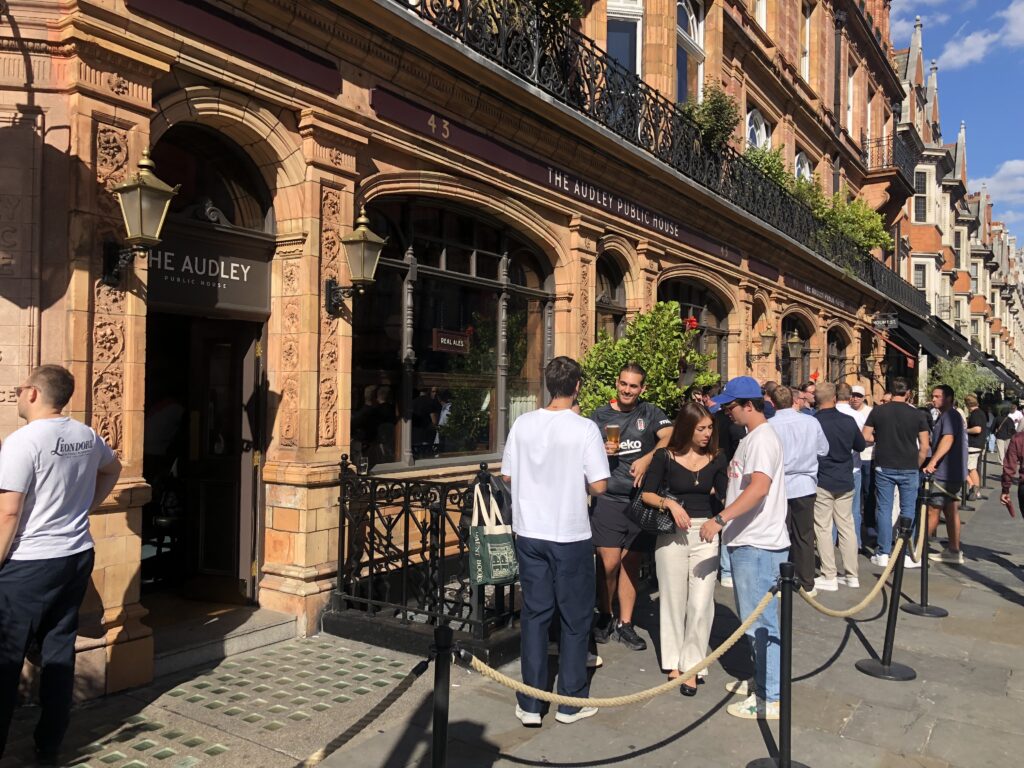
Sadiq Khan is receive sweeping powers to “call-in” and overturn local authority decisions about the licensing, opening hours and responsibilities of pubs, nightclubs and live music venues to enable what the government calls “a more enabling, proportionate and growth-focused approach to licensing in London”, effective from 3 November.
Premises across the whole Greater London that meet local government ministers’ definition of being of “potential strategic importance” to the capital will fall within the scope of City Hall’s freedom to intervene.
The definition in the new regulations (below) includes all premises that fall into the two highest rateable bands – anything above £87,000 a year – meaning the powers will be most extensive in the most expensive areas of the capital, such as the West End, and any with a capacity greater than 5,000 people.
Premises with rateable values as low as £4,300 that wish to stay open after 11pm also fall into the “strategic” category, meaning operators whose applications to do so are rejected by their borough licensing committees may see them granted at mayoral level. Similarly, live music venues in bands B and C are deemed “strategic”.


The other “strategic” category covers applications for licenses of less than three months’ duration. Only premises in the lowest rateable band are untouched by the regulations, which relate to the Licensing Act 2003.
An explanatory note about the regulations reveals (below) that the Ministry of Housing, Communities and Local Government “did not conduct a formal consultation” about the statutory instrument to be deployed, but was instead “informed by stakeholder engagement, including with London licensing authorities, the GLA [City Hall] and the Home Office”.


In February, Mayor Khan said his administration wanted to “continue improving London’s nightlife by encouraging later opening hours, supporting our nightlife industries and revitalising our high streets. Too often we’ve heard from pubs, clubs, music venues, restaurants and others that have struggled to get the licenses they need to succeed.”
Government minister Baroness Taylor told the House of Lords at the time that any new mayoral call-in power would “intended to be used only in specific circumstances, as a measure of last resort”, and last November London MP Miatta Fahnbulleh, at that time a local government minister, told the House of Commons that “the local licensing authority will continue to be the key authority” in determining applications”, adding that “in particular instances” when a decision was deemed to have strategic importance “the Mayor will invariably have to work with the local licensing authority and the community”.
However, some annoyance has already been privately expressed by London politicians representing specific parts of the capital, and London Councils, the body representing all of the capital’s local authorities, is understood to be considering its response to the scope of the powers, which are wider than some had expected.
From Westminster, Tim Barnes, council deputy leader and cabinet member for growth and planning, said: “The broad impact of the new powers leaves questions as to how this is in any way ‘strategic’ and does not align with the idea that the Mayor’s interventions were only meant to be a ‘measure of last resort’ as previously stated by the government. Westminster City Council will be writing to the Mayor’s office and to national government with our objections and concerns.”
Follow Dave Hill on Bluesky, LinkedIn, X/Twitter, Facebook and Instagram. Last updated 16 Oct 2026.
OnLondon.co.uk is funded by sales of publisher and editor Dave Hill’s twice-weekly newsletter On London Extra. To start receiving it, become a paying subscriber to Dave’s personal Substack. Thanks.