
When I stepped off the bus at Victoria in 1991 and saw how different London was from the small Scottish town I had come from, I felt I was going to slot right in, for one great reason – it was full of mad weirdos (ok, eclectic types). Nobody cared about me. Nobody noticed my black clothes, my make-up, my long black hair, my purple fringe skirt. Nobody cared about my music, my lentil-based diet or the fact that I considered myself a strange little girl. I wasn’t the weird one off the bus, because everybody was.
I arrived carrying my brother’s overfilled green army backpack jammed with too many clothes and tapes (and a cuddly toy). The coach station was like 400 countries in one place, bustling with “alternatives” of every kind. Each person was dressed differently from the next and talked in another language, some alone, some with friends or family.
One guy was rollerblading in and out of the empty bays with a ghetto blaster on his shoulder, dicing with the moving buses, which I thought was the coolest, most Kids From Fame thing I had ever seen. I was all at once different to these people and the same as them, landing in a place where I could do, be, or look how I wanted to. I knew straight away that London wasn’t like Scotland, or even England. It was more like everybody in the world-in-a-smaller world (after all).
Now, almost 35 years later, interrupted only by a five-year Stateside gap based, coincidentally, not too far from the school the movie Fame was based on, London is still my home, and I love it. It still excites me. There’s still a buzz of mad energy. I see it as a city for brave, unboxed people, pioneers, adventurers, discoverers, visionaries and idealists; people who want to make a better life, get a better job, and do things that they maybe couldn’t do at home. These people are round every corner, making things happen.
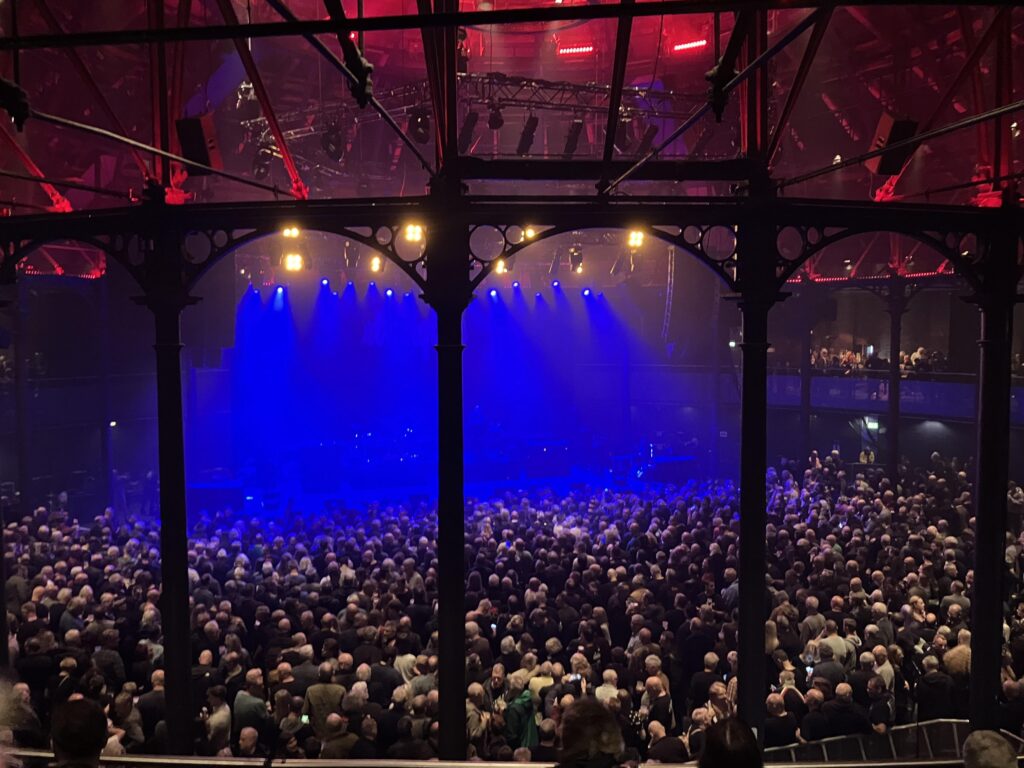
Everybody is welcome here, but there are sometimes surprising contradictions. Like the other week, I went to see The Stranglers at the Roundhouse. It was a fantastic gig on what was the worst-weather Friday night of the year, with rain coming down like sheets of glass in the pitch black of Halloween. All the Tube lines were down and, with the help of a lift (thanks Gerard!), I made it to the venue just in time.
Upstairs on the balcony, both seats either side of me were empty, so I had space to move and enjoy the music, albeit with a faint smell of damp T-shirts and wet jackets drying on bodies. As the band played Something Better Change and No More Heroes, everybody sang back with some passion and a little bit of force, capturing the punk spirit of the crowd, or maybe the city, or maybe the world, but certainly some of London. At least that’s what it felt like.
While enjoying the thump and push of the old punks (now in their 70s, but still got it), I thought of the Zeds: Zohran Mamdani and Zack Polanski. The Zeds would make a good punk band, with punk politics. Zohran could rap. Maybe Zarah Sultana could join.
After the gig, which I loved, the rain had stopped, so I walked to Chalk Farm and my Uber arrived promptly at the station. As with all the best conversations I’ve had in London, they’re always with drivers. I got in his cab and we struck up a chat. He asked me where I’d been, and I told him I’d seen a band at The Roundhouse.
He asked what sort of music they played, and I told him about punk and post-punk and the Seventies and Eighties and the charts, all of which he seemed to enjoy. He didn’t know Golden Brown, despite my attempts at humming it. As we spoke, I noticed a familiar scent.
“Wow, sorry to ask, is that patchouli oil I can smell?”
“It’s whatever my mum told me to buy and use for cleaning my car,” he laughed. “What is patchouli oil?”
“It’s a fragrance oil Goths used to wear, and some still wear. I love it.”
“I think Goths are very cool,” he said.
I thought: This guy’s already a legend.
“Well, that’s five stars for you,” I said. “Six if you include your mum’s recommendation.”
He told me he came to London from West Bengal ten years ago. He said he wouldn’t have learned anything about the world if he hadn’t moved here. I agreed with him, and we had a fun conversation, listing all the foods we’ve tried in London. His list far outdid mine: I talked about Lost Souls pizza in Camden, spicy curries from Brick Lane and excellent chips from The Big Bite in Willesden. But my driver had tried jerk dishes from Brixton, Chinese bao buns from Soho, Vietnamese pho from Shoreditch, Turkish pide from Dalston, and Ethiopian stews from Peckham.
He said he had arrived in the city with nothing (I didn’t ask if he brought a cuddly toy) and worked his way into a place to stay, a couple of jobs, money in his pocket. Obviously, I identified with this, and we discussed the opportunities London had presented us with. He went on to say he loved the city but felt annoyed with those “who come after him”. I didn’t understand why he was bitter about new people coming from India.
“They’re getting it all on a plate,” he said. “I had to work for it.”
“What are they getting?” I asked.
“Everything! Money, houses, food, everything!”
“Are these people you know?”
“I don’t know them personally,” he said, “but I’ve heard it! It’s true, believe me.”
The destination of his words wasn’t where I wanted to go, so I fell quiet and tried to make no judgements of my patchouli-scented driver in the Goth-mobile.
But of course, I couldn’t shut up for long.
“Don’t you feel a bit proud?” I asked him.
“What do you mean?”
“We scratched our way through, didn’t we? I mean, London helped us. Maybe it’s because of our experiences we’ve made it easier for others like us to follow after. Those with the same dreams and hopes? I’d rather help them.”
“Maybe, uh, I don’t know about that”, he said. “It was very tough.”
I went on to tell him stories of when I arrived in London, and how it wasn’t easy at first: bedsits with infested mattresses, shared house toilets, rats, and my regular dinner – a block of cheese to grate and last a week, a potato for five pence to make a jacket, and a three pence onion to chop.
It was microwaved tatties and grated cheese every night until payday, until a brilliant boss – Graham Singleton at Ogilvy – saw a glimmer of potential and pivoted me on my way to a great career. (What he actually said was: “You just seemed so keen, I couldn’t not do it). That same boss also gave me money and told me to go and buy some “office” clothes, and that was the end of the fringey skirt fire hazard at the photocopier.
“I had it tough too,” I told the driver, “but London offered me much more opportunity than there was at home. I feel like it always has, and still does that for people.”
“Oh yes,” he agreed. “But not easy for us, though, was it? Easier for them that come now. Much easier.”
My turn to be quiet again. Then he speaks.
“But it is a great city. Doesn’t matter where you’re from, everyone can make a living here. All kinds are welcome.”
The car pulled up outside my house.
“Where are you from, originally?” he asked.
“I’m Scottish. I suppose you could call me a domestic immigrant.”
“Ah! Or a Goth!” he replied, smiling.
The Prius whirred off down the road. I turned the key in the front door, and went back to thinking about The Stranglers. I made a mental note to to see Hugh Cornwell’s then upcoming gig at Islington Assembly Hall and find out what Stranglers tracks he’d pack into his solo setlist.
I sat down on the couch. Strange Little Girl was home, and thinking of baked tatties.
Follow Julie Hamill on Instagram.
OnLondon.co.uk provides unique coverage of the capital’s politics, development and culture with no paywall and no ads. It is funded by subscribers to publisher and editor Dave Hill’s twice-weekly newsletter On London Extra. To receive it, become a paying subscriber to Dave’s Substack or follow any Support link on this site.