
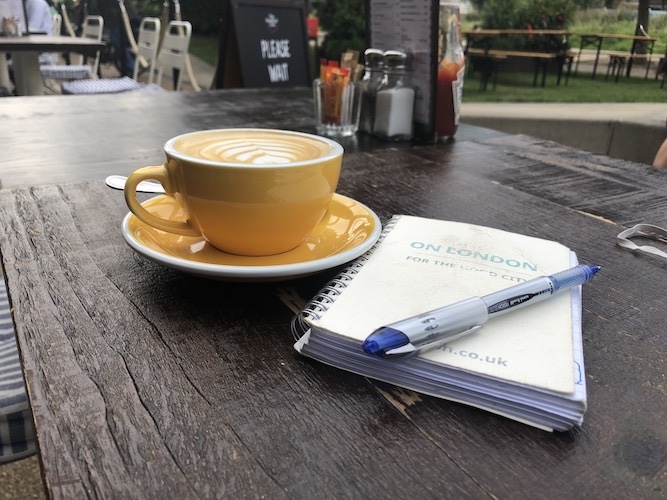
On London was launched in a more rudimentary form on 1 February 2017 – exactly nine years ago today. For the the previous eight years or so I had been the Guardian’s London commentator, self-publishing from home on a freelance deal and enjoying what, up to that point, had been my best job in journalism ever.
But the paper got a new editor, there was a desire to cut budgets that could easily be cut and an attitude to London from the big departments at King’s Place that was doing bad things to my blood pressure. It was a good time to be got rid of. One year later, I launched a nerve-racking, five-week crowdfunding campaign that raised £25,000. It paid for a bespoke site design and helped me to establish what remains the smallest media empire in the world – but also, I like to think, a unique one.
Recent years have seen a proliferation of London news sites, each with their own identities and fields of interest. This has all been to the good, especially as the more established London media have been scaling back. On London‘s priority has always been on the politics, development and culture of the city, with a primary focus on the policies and influence of the Mayor.
On London is not a hobby or “a blog”. It is a journalism website whose writers are serious, knowledgeable and experienced in doing things in London – in planning, transport, housing, economic development and so on – not just writing about them. Their output provides coverage of a depth and understanding of London and how it works – and doesn’t work – not often found elsewhere. They and I are united in wanting to make London a better place for those who live, work and visit here: to recognise its many successes and to explore ways of correcting its failings. The site’s mission is summed up in its catchline – For The Good City.
The website is also, in its small way, a corrective to populist attacks on London and Londoners, from whichever direction they come. Denigrating and misrepresenting the capital has, for years, been a major preoccupation of the far-Right, both in Britain and increasingly abroad, but some on the British Left have long been in on the act, too. As a consequence, there is a void of understanding about the city’s true character and its relationship with the rest of the UK. On London strives to put that right.
I’m pleased to be able to report that during the course of the past year On London became fully financially self-sufficient through sales of my now twice-weekly newsletter On London Extra. The website carries no advertising, has no paywall and doesn’t publish “sponsored links” or advertorial. Previously, I have relied on a little bit of “supported content” (retaining full editorial control) or one or two jobs on the side to keep the bank balance healthy. But On London now just about stays happily afloat without that welcome help.
That doesn’t mean I’m not still eager to boost the finances of the business and On London‘s readership. I would like to refresh the look of the site. I would like to be able to pay its writers better. So if you aren’t already a supporter of On London, please consider making its ninth birthday nicer by subscribing to On London Extra using either any “support” link on the website itself or – more conveniently for me and probably for you too – becoming a paying subscriber to my personal Substack. It costs £5 a month or £50 a year. In addition to the newsletters, you will also receive offers of free tickets to London events I am involved with.
Thanks for your time. And thanks for reading.
Dave Hill (owner, editor, publisher and writer, On London.co.uk).
Follow Dave Hill on Bluesky, Facebook, Instagram, LinkedIn, YouTube and Apple.
As a long term supporter of On London Extra, I just wanted to say that I am so glad that you are making money, or at very least not losing it. Granted the lack of mainstream coverage of London (and when it is covered, it usually has a provincial bias). I try to support all sensible London-wide journalism sites. I hope you will not mind that I support Jim Waterson’s lot as well!
The very best of luck for the next five years.
Harry