Blog

Muhammed Butt: The West London Orbital railway could be a national government success

If the government is seeking its next growth success story, it need not look too far. The West London Orbital railway is a shovel-ready scheme that would enable the building of 25,000 homes, the creation of 11,000 jobs and lift some of our London communities most in need out of poverty.

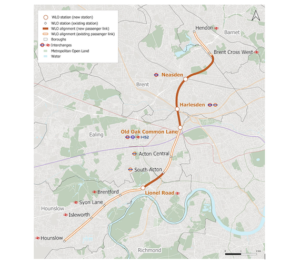
It is a simple proposal: an existing freight rail line that is currently underused would be repurposes into an 18-kilometre London Overground line running between Hounslow and Hendon. It would connect the boroughs of Brent, Barnet, Ealing and Hounslow directly to each other and to Old Oak Common, which is soon to become one of the most important rail interchanges in the country. Its estimated cost of under £1 billion is modest compared with many national rail schemes and the rewards would be great.

Starts on new housing in London remain below what is needed to meet demand, but good transport infrastructure gives developers the confidence to invest. The West London Orbital would stimulate such investment and I know from experience as leader of Brent Council that developers are already keen to build in my borough.

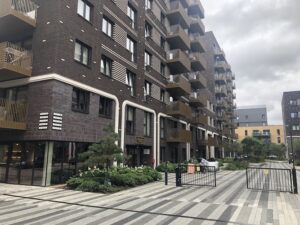
For example, at the College of North West London site in Willesden 1,600 homes are planned and at least 1,100 are proposed for Neasden Goods Yard. Realising the full potential of these schemes depends on the connectivity the new railway would provide. Such connectivity also widen labour markets.

Growth is the government’s central mission. The West London Orbital aligns directly with it. And that growth would not be confined to London. The capital generates roughly 23 percent of the UK’s GDP and has historically returned a substantial net fiscal surplus to the Treasury. When productivity rises in London, our country’s public purse grows fuller accordingly. The supply chains that serve London’s logistics, life sciences and manufacturing sectors stretch across the country, and the tax receipts raised here support public services well beyond the M25.

Yet infrastructure debates are too often framed as a contest between London and the rest of the country. It would be disingenuous to pretend such sentiment has no roots. The United Kingdom remains institutionally Londoncentric: parliament sits here; Whitehall sits here; political power is concentrated here. For many communities beyond the capital, that centralisation has made government feel distant and unresponsive. It is hardly surprising that frustration has, at times, attached itself to London as a place.

But we must not allow that debate to become muddled. London as an institution and London as a population are too often conflated. The result is a caricature of the capital as uniformly as being affluent and insulated against hardship. But as I know as Brent’s leader, and as fellow borough leaders know, this obscures the lived reality of millions of Londoners.

London’s poverty rate has long exceeded the national average. Because the capital’s cost of living is so expensive, a basic standard of living here can need to be as much as to 58 per cent more than elsewhere in the UK. The latest Indices of Multiple Deprivation show that neighbourhoods among the nation’s 10 to 20 per cent most deprived, including Harlesden and Neasden, lie along the proposed West London Orbital corridor.

We know that transport unlocks growth: the Elizabeth line now carries around 800,000 passengers a day, with more than 70,000 homes granted planning permission within a kilometre of its stations. We now know that connectivity is not the reward for growth, but a condition for it.

A big advantage of the West London Orbital is that the spine of the railway already exists. There would be no new tunnels and no starting from scratch. Earlier this month, Transport for London has announced that up to £6.65 million has been agreed to be committed to the next phase of designing the scheme, with Brent, three other boroughs and the Old Oak and Park Royal mayoral development corporation collectively contributing half of it.

Clear government backing is needed now to move from planning to delivery. The West London Orbital is a growth project in the national interest.

Muhammed Butt is leader of Brent Council. Map from TfL.

OnLondon.co.uk is funded by sales of publisher and editor Dave Hill’s twice-weekly newsletter On London Extra. To start receiving it, become a paying subscriber to Dave’s personal Substack. Thanks.

Categories: Comment

True London podcast: Any progress on the housing emergency?

There were a lot of big announcements about London housing last year amid a slump in supply that made the capital’s heroic, government-set delivery targets look even more unrealistic. What has happened since then? Have the emergency measures agreed between Secretary of State Steve Reed and Sir Sadiq Khan started to have any effect? Is progress being made towards building the two New Towns in London that were recommended by the government’s task force?

Then there was the problem of the new building safety regulations – not the regulations themselves, but the very slow process of ensuring that development projects adhered to them. That was a major drag on getting things going. Meanwhile, housing associations, so vital for providing various kinds of “affordable” homes in London, including at low cost rent levels, were struggling with their own financial problems. Then there was the terrible rise in homelessness and the burden this was placing on many of London’s local authorities.

It’s been hard to keep up with everything. But one person has is Daniel Reast, senior research officer with think tank Centre for London. It was a treat to have him as my guest for the latest True London podcast, which you can watch below or just listen to it here.

By the end, you will be up to speed with all the action (and inaction) and all the policy changes that have happened or will do soon. The future context is the start of consultation on the Mayor’s next London Plan, which looks like it will begin in June. The podcast is just under 20 minutes long. The good news is that some of it is actually quite cheerful.

Hopefully, Dan will make another True London appearance soon. Centre for London is to hold a housing summit on 21 April and promises “early insights” from its ambitious Delivering the Homes London Needs programme.

Follow Dave Hill on Bluesky and at LinkedIn.

OnLondon.co.uk is funded by sales of publisher and editor Dave Hill’s twice-weekly newsletter On London Extra. To start receiving it, become a paying subscriber to Dave’s personal Substack. Thanks.

Categories: Analysis

Reform UK steps up search for borough elections candidates

Reform UK appears to be struggling to recruit enough candidates to contest every electoral ward in the London borough elections, with just over three weeks left for nominations to be submitted.

The party took out a full-page advertisement in the Metro newspaper urging “new people with new ideas” to come forward and “represent their local community” on 7 May.

This follows a national email appeal for council candidates from party leader Nigel Farage to supporters earlier this month, and has been accompanied by emails from Reform’s Regional Director for London, Richard Bingley, to people on the party’s mailing list, tailored to the borough where they live.

There are 679 electoral wards in the 32 boroughs and Reform has previously pledged to contest every one of them, though it has not said how many of its candidates will stand in each. A total of 1,817 seats will be competed for, with more than half of the wards returning three councillors.

The deadline for candidate nominations is 9 April at 4pm.

It is to be expected that Reform will find it easier to recruit in boroughs where they stand a chance of winning seats and even council control, such as Bexley, Havering, Bromley and Barking & Dagenham, but much harder in Left-leaning inner London boroughs such as Islington, Camden, Hackney, Southwark or Lambeth where far-Right parties have attracted negligible support in the recent past.

Farage has insisted that the vetting of candidates everywhere will be improved compared with its “poor” standard in the past.

Refrom’s Metro newspaper ad claims that “Momentum is firmly with Reform UK” and the borough-level email states that Reform is “soaring in the polls”. However, although the party has been consistently ahead in national surveys for a year, the average findings of seven different polling companies have shown a decline in support for it since the autumn.

Polls of London voters continue to show Labour ahead, but by a reduced margin, with Reform, the Conservatives and the Greens jostling for second place and the Liberal Democrats fourth.

Follow Dave Hill on Bluesky and at LinkedIn. Image of Metro from James Heale X/Twitter feed

OnLondon.co.uk is funded by sales of publisher and editor Dave Hill’s twice-weekly newsletter On London Extra. To start receiving it, become a paying subscriber to Dave’s personal Substack. Thanks.

Categories: News

Richard Brown: London’s universities are a 200-year success story

London’s universities are deeply embedded in the city’s streets and its global city status. But it wasn’t always like this. Two hundred years ago, its lack of a university was keenly debated in London’s taverns and coffee houses, decried as an impairment of the capital’s global status and an impoverishment of its citizens.

University College London (UCL), initially established as a private venture, led the way in addressing this deficit from 1826 – it is now marking its bicentenary. King’s College London followed in 1831, and by 1836 the University of London was constituted as an examining and degree-awarding body.

The mere existence of these start-ups was a signal of changing times. While Scotland and Wales had their own universities, Oxford and Cambridge had stymied the establishment of new universities in England, threatening to prosecute any graduates who participated in them.

As Degrees of Innovation, a new report written by me and published by University of London, explores, these new universities were radical in their approach. At a time when Anglicanism and Englishness were seen as two faces of the same coin, neither UCL or King’s set religious tests for admission (though King’s was more closely allied with the Church of England).

The creation of a separate examining body enabled rapid and unintended expansion. By the 1850s more than 100 institutions across Britain and Ireland were affiliated to the University of London, and from 1858 its degrees were opened up to anyone who met entrance requirements.

University of London exams were taken and degrees awarded in centres across Britain and its empire. London’s universities were also relatively quick to open up to women: the first women’s colleges were established in 1850 and University of London awarded degrees to women from 1878 – 50 years before Oxbridge.

These new universities were lampooned in conservative publications such as John Bull magazine, which derided UCL as a “cockney college” that would teach dustmen to speak Latin and Greek. But a 1859 magazine article, possibly written by Charles Dickens, pushed back:

“The Oxford don may smile over his old port at an university that will extend her hand and offer a firm grip even to the young shoemaker who studies in his garret. He may feel a little scornful of a university that gives, to the poor as well as to the rich, to the man of few opportunities as to the man of many, at the cost of hard toil and years of self-denial, the name and rank of a scholar.”

Alongside London’s new universities, the 19th Century saw explosive growth in polytechnics and working men’s institutes. These sought to extend the benefits of adult education to all neighbourhoods and classes, and to bridge the widening skills gap between Britain and other industrialising economies.

By 1900, the new London County Council (LCC) had established a Technical Education Board, led by Quintin Hogg, founder of Regent Street Polytechnic (now the University of Westminster) and Sidney Webb, founder of the London School of Economics. The LCC took on responsibility for funding further and higher education, alongside City of London charities and guilds, while University of London awarded degrees across London.

By the 1930s, polytechnics could be found in every part of the capital, while two central clusters of universities had been established in South Kensington and Bloomsbury. In the latter, Senate House stood out – for many years the tallest secular building in London, its height only justified by the fact that its higher floors were not inhabited but occupied solely by books (and presumably librarians).

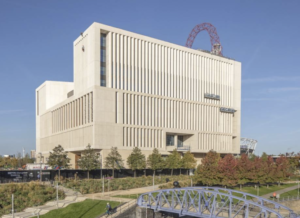
In moving into these areas, universities had been pioneers and catalysts for what we would now call “regeneration”, a tradition that continues today with UCL’s new campus in Stratford (pictured), Imperial’s in White City and King’s College’s in Canada Water.

Two centuries on from its first university establishment, London is seen as one of the best student cities in the world and has two of the top ten universities. Half a million people study in London every year and a further 100,000 study for London degrees from overseas. Young people from all social backgrounds have much higher rates of participation in higher education than in other parts of the UK, and London’s universities have an impressive record of enabling people from disadvantaged backgrounds to get good degrees and good jobs.

But universities and students in London face the same stresses as those across the country – fees that have been squeezed over the past decade, immigration policy changes meaning fewer foreign students and therefore less cross-subsidy, new technology threatening traditional models of teaching and learning, and questions being raised about the cost and value of degrees.

As the essays that accompany Degrees of Innovation suggest, London’s higher education history may offer inspiration for the future – offering more flexible courses, mixing in-person and online learning and allowing learning to become a lifelong process rather than a one-hit investment. London’s further and higher education institutions are a success story. With government help they can continue to support and showcase the capital and the nation as a whole.

OnLondon.co.uk is funded by sales of publisher and editor Dave Hill’s twice-weekly newsletter On London Extra. To start receiving it, become a paying subscriber to Dave’s personal Substack. Thanks.

Categories: Comment

Tim Whitaker: London needs a new policy narrative for older people

Despite its youthful pretensions, London is an ageing city. On London’s publisher and editor Dave Hill has helpfully triggered a much-needed debate about how it serves older Londoners. By 2035, one in four of us, including Sir Sadiq Khan, will be well over 60, forming the fastest-growing age group.

While the capital can be attractive for some who are already past 50, it is unclear how good it is at meeting all their needs. Surveys by Age UK London show that only a fifth of older Londoners agree that “London is a place where older people are valued”, highlighting a worrying gap between the city’s image and many people’s lived experience.

This over‑50 population is increasingly diverse in background, health, finances and attitudes, so it cannot be treated as a single, homogeneous block. The affluent London retiree has become a popular stereotype, yet this masks the reality that many others are struggling. One in four older Londoners experience poverty with a precarious later life.

How effectively are London’s policies addressing the needs and potential of older residents? In January, the Greater London Authority (GLA) published its Towards an Age Friendly Progress Report 2025, a long-awaited evaluation of its November 2023 Age Friendly Action Plan.

Age Friendly status is supposed to improve older people’s quality of life, support independence and reduce social isolation. Regrettably, only 11 of London’s 32 boroughs have achieved this designation. Critics argue that City Hall’s own journey towards becoming truly age friendly has been slow and tortuous. Covid understandably disrupted priorities, but it was noteworthy that lobbying for a dedicated Older People’s Mission within the London Recovery Programme failed.

The GLA’s progress report is well intentioned and largely lists outputs from various programmes, but it ducks the tougher questions about whether these improve outcomes for older Londoners.

Take housing. The report cites figures for supported and specialist homes (though these are not exclusively for older people), but doesn’t show the difference they make to older Londoners’ lives. London has the highest proportion of older people living in homes blighted by condensation, damp or mould, yet this is not mentioned. We are, though, told that 151 lucky older Londoners were able to move out of the capital through the Seaside and Country Homes scheme for social housing tenants.

On employment, we get to know about adult training provision and learn that 26 employers signing up to the Centre for Ageing Better’s Age-Friendly Employer Pledge. Yet there is nothing about measures to help the large share of older Londoners working in low‑paid or precarious jobs, nor the high numbers who  are economically inactive and would sooner not be. Worryingly, though, it reveals a fall in the number of 50 to 59‑year‑olds employed by the GLA. Only five per cent of its staff are over 60.

This raises a broader question about the priority given to age in London’s policy playbook. Within the GLA, it is treated as one of several “protected characteristics” and sits within the City Hall equalities team. But other issues tend to gain more visibility and attention.

At present, the GLA appears to lack a robust long-term strategy for addressing demographic change. Its action plan is not strategic enough to realise the growth benefits of ageing or capture the wider opportunities for social and economic vitality in the capital. For example, the Inclusive Talent Strategy of the London Growth Plan, a joint initiative with London Councils, acknowledges employment barriers facing older people doesn’t give them a sufficiently detailed policy focus.

London needs to be a global leader in managing demographic change if it wants to unlock future economic growth. This means moving away from seeing ageing purely as a burden and a cost. It should instead be reframed as a source of assets, skills, spending power and social input.

There is a need for a new narrative about ageing in London’s policy thinking – one that explicitly aims to secure an economic dividend from demographic change.

The broad priorities are well known. Keeping people in employment for longer depends on flexible working and retirement options. Alongside this, it involves lifelong learning and skills development tailored to older workers and determined action to combat workplace ageism.

Supporting healthy ageing by focusing on prevention in health and social care and by integrating health and care facilities within neighbourhoods will help older people continue to contribute.

This, in turn can, ease pressure on services and reduce long‑term costs. Ensuring good housing for older people, including better use of existing stock and homes that support independent, healthy living, is another essential pillar.

Finally, providing the right infrastructure for older people, from transport to neighbourhood design, will help stimulate local economies. The importance of the so called grey pound is often forgotten.

But this new policy thinking will require a cross‑sector partnership, bringing together policymakers, health services, education providers, employers and businesses, community organisations and older people’s groups. Together they should co‑design policies that harness an older population as a driver of growth rather than just a problem to be managed.

Tim Whitaker is an older age employment consultant, a Trustee of Wise Age and member of the London Age Friendly Forum. Photograph from Age UK London.

OnLondon.co.uk is funded by sales of publisher and editor Dave Hill’s twice-weekly newsletter On London Extra. To start receiving it, become a paying subscriber to Dave’s personal Substack. Thanks.

Categories: Comment

Tim Donovan: Motoring, taxing and feuding – The Newham battleground, 2026

It’s all getting very nervy. In recent days there have been dire predictions that Labour could lose anywhere between 600 and nearly 750 council seats in elections to the capital’s town halls in May. In east London, desperate times are leading to desperate measures.

Faced by the threat of an Independent winning the Newham mayoralty, the Labour candidate is ditching one of his Labour predecessor’s key policies on car use, parking and air quality. It could bring him into conflict with Sir Sadiq Khan and his net zero agenda at City Hall. Some say it looks as if Labour have decided that only by matching the insurgent candidate’s populist pledges can they avoid failing to win a majority of council seats for the first time since 1968, and the only time in the borough’s existence – and even then it was the biggest party and retained control.

Serious opposition to Labour is something few have known in these parts, but that could all be about to change because of a heady mix of toxic local intra-Labour politics, disillusionment with Sir Keir Starmer’s leadership, anger over Gaza and the emergence of a grouping of Independents tapping into people’s local concerns about quality of life and cost of living issues.

What could come to be seen as the moment the tide turned came in July 2023, when Mehmood Mirza, a local lawyer and landlord, defeated Labour in a by-election in the Boleyn ward in East Ham. It may have been a surprise then. But Mirza is now leader of the Newham Independents, a registered political party since June 2024, and their mayoral candidate. He could be just weeks away from moving into Newham’s imposing glass headquarters overlooking the Royal Albert Dock.

Over the last 18 months the Newham Independents’ momentum has continued. They have won two more by-elections – one in Plaistow North in November 2023, the other in Plaistow South last September – and a councillor elected for Labour in 2022 has left and joined their council group, which forms the borough’s official opposition. Four other councillors have also deserted Labour, one to join the Greens, the other three to sit as Independents for their wards (they’ve formed their own, separate, Independents council group).

Add the two Greens elected in 2022, and there are now ten councillors doing their best to make mischief for the current Labour administration. That has not been too difficult. Recently, Newham has appealed for government financial help, hiked Council Tax last year by nearly nine percent, been sharply criticised by the Regulator for Social Housing and received a “best value” notice from government raising concerns about its governance and culture.

The current Labour Mayor, Rokhsana Fiaz, has been in power since 2018, serving two terms. For several years local party activities have been suspended and the process of choosing the 2026 mayoral candidate was done by Labour headquarters. Fiaz was not re-adopted and Labour instead selected a former Newham councillor, Forhad Hussain, to try to counter the Mirza surge.

Despite the borough’s financial situation, Mirza is promising a Council Tax freeze and “more social housing”. His most controversial policy is to dismantle the borough’s emissions-based parking system, whereby people pay different amounts depending on how polluting their vehicles are. He is promising residents a free parking permit for their first vehicle and two-hours free parking anywhere in the borough.

Image001

Labour’s Hussain has vowed to match the free permit pledge and offer one-hour free parking. This puts him directly at odds with the current administration. Local Labour figures say the policy would reduce the incentive to switch to less polluting vehicles and lead to more car journeys, particularly short ones. The Green mayoral candidate Areeq Chowdhury, one of the defectors from Labour, is likely to try to capitalise on this. Visitor parking charges would remain unchanged. Both Mirza and Hussain have been approached for comment.

Image002

Simon Munk from the London Cycling Campaign has criticised the permit policy, claiming that it was unlikely to change the votes of many car users but would penalise the 60 percent of residents without a car who would see less money spent on active travel schemes as a result. “It incentivises car use and car ownership. If you can do it free, you will do it more. And then it cuts your budget for spending on the majority of people who don’t have a car.”

Next week (Tuesday March 17), with the elections less than two months away, Fiaz and her cabinet are due to approve a statutory air quality plan for the next five years in a borough where seven percent of deaths are attributed to some degree to pollution – significantly higher than the national average.

The new plan explicitly endorses the decision in 2021 to introduce the emissions-based parking strategy to reduce car ownership overall and encourage drivers to switch to less-polluting vehicles. Newham had seen the biggest drop in registered vehicles across London, a reduction of four percent or 2,860 vehicles, and this helped lead to a significant decrease in levels of the No2 pollutant, the report to cabinet says.

Town hall sources estimate the parking give-away could cost around £20 million over the next four years and some of Hussain’s Labour colleagues are concerned that it will hamper efforts to tackle air quality and climate change. It could also put Newham on a collision course with Mayor Khan, who is already struggling to get close to two key targets – making the capital net zero by 2030 and ensuring 80 percent of journeys in the city are by foot, bike or public transport by 2041.

Seven years ago, Newham became one of the first councils in the country to declare a “climate emergency”, adopting a pledge to be carbon neutral by the end of this decade. This was more than a gesture. Its subsequent strategies have been focused on encouraging more walking, cycling and the use of public transport, reducing waste and ensuring homes, workplaces and schools are energy efficient. Some Labour activists are said to be finding it hard to campaign on Hussain’s new parking policy.

Mirza is also promising to hold a consultation on whether to keep the borough’s existing Low Traffic Neighbourhoods (LTNs) and says he will cancel future ones. Hussain has pledged that there will be “community ballots” on all future schemes.

Not only a feature in Newham, the future of LTNs and safer street schemes is also being weaponised elsewhere in these elections. In Croydon, the Conservative mayor Jason Perry is under fire and in difficulty after the High Court ruled he acted unlawfully by making LTNs permanent primarily in order to raise money. Tower Hamlets mayor Lutfur Rahman is insisting he will appeal against a ruling that his removal of LTNs was unlawful.

The Newham mix also includes Conservative Terri Bloore and Reform UK. At a press conference last week, Reform leader Nigel Farage unveiled former Newham mayor Sir Robin Wales as his new director of London government and Clive Furness, a close ally of Wales, as the party’s mayoral candidate in Newham.

Wales was de-throned by Fiaz in 2018 – after an internal Labour coup – having been at the helm of the borough for almost a quarter of a century, first as council leader then as its first ever directly elected mayor. He may have left the scene, but his ghost lingers. Politics here is still seen largely through the prism of whether you are or were “pro or anti-Robin”.

The flame has been kept alive by an online news site, Open Newham, often acerbic in style and highly critical of the current Fiaz regime. It was founded by Furness, himself a former Newham Labour councillor, and co-author with Wales of a book critical of the party.

The impact Furness may have on the race is hard to predict, although the strongest early impression was that he will take votes most from Labour and make an Newham Independents victory more likely. Such is the entrenched, dynastic nature of Newham politics that Furness and Hussain know each other well. They were colleagues in the clique which formed Wales’s inner circle a decade ago.

Furness told the press conference that both his Independent and Labour rivals had put forward policies that were similar to those of Wales, but that he would be the only one to control spending and curtail the reckless use of people’s Council Tax.

Where Furness stands on car use and parking was not revealed, although Reform UK are clear they will upend net zero polices wherever they find them. Labour expect Furness to match Mirza’s free permit policy and go further on LTNs by stripping them out without further consultation.

At the Farage event, Wales’s diagnosis of Labour’s current ills was strikingly focused on the national picture, offering little on where Newham or any London council run by Reform might find savings and do things better at a local level.

Both he and Furness revealed a seething preoccupation with the transgender debate, scornful of Labour’s “experimenting on children”. This was taken to be a reference to the controversial clinical trial of so-called puberty blocker drugs involving around 220 children under the age of 16.

It gave a flavour of the kind of issue Reform UK might be happy to discuss on the doorstep, though they may find the people of Newham more interested in their streets and bin collections – and how it looks very much as if they won’t have to pay to park outside their home for much longer.

Tim Donovan is the former political editor of BBC London and now a trustee of Centre for London. Follow him at LinkedIn. Photograph: Forecourt of Stratford station, Newham. 

OnLondon.co.uk is funded by sales of publisher and editor Dave Hill’s twice-weekly newsletter On London Extra. To start receiving it, become a paying subscriber to Dave’s personal Substack. Thanks.

Categories: News

London Growth Plan progressing well, says Deputy Mayor for Business

A year has passed since Sir Sadiq Khan and London Councils launched their London Growth Plan for boosting the capital’s economy and helping of  thousands of Londoners into work. How has that been going? Pretty well, according to Deputy Mayor for Business, Howard Dawber.

The indefatigable Dawber – he was banging the drum for the city this week in Cannes at the annual global property trade get-together, MIPIM – was under the spotlight twice last week at the London Assembly, taking questions about progress towards the plan’s ambitious 10-year targets, including creating 150,000 jobs and increasing both productivity and the incomes of the capital’s lowest earners by 20 per cent by 2035.

There was no shortage of optimism from him. London was the university capital of the world, with “intellectual property coming out of our ears”, the theatre and sporting capital, the “start-up” capital outside the USA, “number one” for foreign direct investment in Europe, and still “massively more productive” than any other UK city. The gap is closing, but London is still looking at 1.9 per cent growth year on year, he said.

Dawber (pictured) didn’t duck the challenges, admitting that the growth figure was “not where I would want it to be”, that many families and high street businesses were struggling, that financing business growth remained difficult, that economic inactivity and unemployment were higher than the national average, and that the housing market remained sluggish.

But 12 months in, and amid new international turmoil, the growth plan was holding up, he said, with a focus on not just “maintaining our global competitiveness, supporting the things we need to improve in terms of growth”, but also on making sure that “where there is growth, it extends to all the people of London”.

He told London Assembly members (AMs) that the first year had already seen £22 million allocated by City Hall to improve London’s high streets, procurement by the city’s anchor institutions network of major public employers boosting small and medium businesses, the launch of a pioneering AI taskforce with £20 million to equip Londoners for the challenge of technological change, and new plans to support the capital’s £139 billion night time economy.

Borough growth plans were also coming forward, and the proposed overnight visitor levy could raise some £350 million a year for the city, he added. And following the go-ahead for the Docklands Light Railway extension to Thamesmead, a comprehensive “London infrastructure framework” setting out the capital’s priority shopping list of further major schemes would be launched shortly. Discussions were “ongoing” with Whitehall over further devolution, to “allow London to raise money to deliver these things itself”, he said.

Dawber described the centrepiece of the plan as its Inclusive Talent Strategy, launched last October, with £142 million of City Hall funding, as a new approach to training and supporting Londoners into work – a wholesale “retooling” of existing skills programmes. This is the “crucial piece of glue between the people who need jobs and the jobs that need people,” Dawber said. And with its offer now coming onstream, backed by business and the boroughs, he was confident that the Mayor’s 150,000 new jobs target would be met.

Was this too optimistic given continuing pressures, including current unemployment levels, exacerbated perhaps by government policies such as the hike in the employers’ national insurance levy? That was the charge from Conservative AMs, including Alessandro Georgiou, who said those policies had “destroyed London’s economy” and driven away wealthy potential investors.

Not true, said Dawber. “I’d certainly like to see taxes on business reduced over time, when the opportunity arises to do so,” he said. “But the Chancellor inherited a dysfunctional economy. The public finances were not in a good state and the Chancellor has had to take difficult decisions.”  Meanwhile, he added, the Mayor continued to lobby for more government support for business, including a wider reform of Business Rates.

Dawber also asserted that talk of an “exodus” of high wealth individuals was “overblown”. This prompted Green AM and national party leader Zack Polanski to make his own challenge, questioning what he characterised as the Mayor’s defence of “billionaires”.

Again, there was a nuanced answer from Dawber. “We want to be a place where people with a lot of money who want to start a business or invest want to come,” he said. There’s a balance between fair taxation and the people with the broadest shoulders bearing the highest burden, which is right, and getting into a position where you are putting people off. I think we’ve got that balance about right.”

Follow Charles Wright on Bluesky. Watch the Assembly plenary in full here.

OnLondon.co.uk is funded by sales of publisher and editor Dave Hill’s twice-weekly newsletter On London Extra. If you don’t already receive it, become a paying subscriber to Dave’s personal Substack or follow any Support link on this website.


Categories: News

Charles Wright: London’s latest revival could be getting underway

In response to London’s travails, the argument is often made that the city has a particular resilience and ability to remake itself. It may feel beset on all sides at present, but is its next renewal already underway?

A couple of years ago, Professor Tony Travers in a Strand Group lecture highlighted events in the capital’s history from which recovery was by no means certain: the Great Plague of 1665 and the Great Fire the following year; the Blitz of 1940-41 and the wider impact of Word War II.

He noted that the war was followed by three decades or more of decline. Manufacturing contracted and the world’s largest docks headed towards dereliction. In 1939, London’s population stood at 8.6 million. By 1985, it had fallen to 6.6 million. In 1986, city-wide government disappeared with the abolition of the Greater London Council. The direction of travel, it seemed to Travers, was “simply a road heading downwards to oblivion”.

But then, the opposite happened: population growth; Docklands towering upwards; the City of London reversing its anti-development stance; the Docklands Light Railway (DLR) and the Jubilee Line extension opening up inner east London; the capital’s first directly-elected Mayor. There followed the regeneration of Kings Cross, Battersea and Stratford and, four years ago, the opening of the Elizabeth line, already the most heavily used railway in the country.

The impetus for all this remains unclear. Most likely, it stemmed from a combination of impacts, including deregulation and the “Big Bang” liberation of the City, significant public investment, the galvanising effects of the Millennium and then the Olympics, and new mayoral powers over planning and transport. But whatever the causes, the capital was again reviving.

Today, things are again not looking so good. The global financial crisis, Brexit and its aftermath, the pandemic and the invasion of Ukraine have all undermined the city’s strengths. So have “levelling up” policies, high poverty rates and a decade of austerity. The housing crisis continues, while the voices of those who talk the city down keep growing louder.

Can London repeat its reinvention trick? Travers listed some of the policy changes he thought would help get London back on track: more devolution to City Hall and the boroughs, including revenue-raising powers through control over property taxes and a tourist levy; boosting investment in housing and transport, including buses; “cleaner and safer” neighbourhood initiatives; a more coordinated approach to the governance of central London.

Since then, some of those things have happened. We’ve seen more government cash for affordable housing and for transport in the form of supporting replacements for ageing Underground fleets and backing for the DLR extension to Thamesmead, which will prepare the ground for thousands of homes to be built on both sides of the river.

The Mayor is expanding the Superloop bus service as part of a new plan for improving street transport. There is emergency action to kickstart private housing development, and a tourist tax on its way.

The very shape of the city is changing too, with new planning policies for bringing denser development to the suburbs, two London New Towns and even some limited Green Belt release.

While the previous government blocked development at Cockfosters station car park with what was seen as an extreme example of Whitehall intervention, the current one reversed the ban, and a much-needed 373-home scheme is now going ahead. A similar scheme at High Barnet station is set to follow.

The London terminus of HS2, left in doubt by the previous government, will now be at Euston, demand for “grade A” office space in the capital’s commercial centre is increasing (and being met perhaps as much in refurbished stock as in soaring new-builds), Canary Wharf is back post-Covid, and the Elizabeth line is attracting investment across its route. And perhaps the highest profile indicator of confidence in London’s renewal, the Oxford Street pedestrianisation scheme, is now going ahead at pace.

There’s more to do, of course, notably on fiscal devolution – London still retains only seven per cent of the tax it generates compared to New York’s 50 per cent –  on the “cleaner and safer” agenda, and on the continuing financial pressures on London’s local authorities, nine of which would be unable to balance their budgets this year without additional government help.

There’s also the broader and perhaps perennial question, of how, in Travers’s words, to “advance the city sensitively, allowing continued economic dynamism allied to improving social outcomes for citizens”.

No room for complacency then. As Rob Anderson from the Centre for London think tank put it this week, the capital’s economic success, so vital for the UK as a whole, is not guaranteed. London’s streets are not “paved with gold”, and the government “needs to recognise this complex reality”.

It’s right that the combined forces of the city continue to make its case. But despite the doomsters, the signs are positive. Time, perhaps, for a little more optimism too.

Follow Charles Wright on Bluesky.

OnLondon.co.uk is funded by sales of publisher and editor Dave Hill’s twice-weekly newsletter On London Extra. If you don’t already receive it, become a paying subscriber to Dave’s personal Substack or follow any Support link on this website.

Categories: Comment