The decision by Rachel Reeves to end the so-called “two child limit” on benefit entitlements for families with low incomes has been warmly welcomed by those who’ve long campaigned for it. In the capital, however, even those rejoicing are also warning that another aspect of the system could blunt the good effects of the change, which will take effect from April.
Katherine Hill, director of the 4in10 child poverty network, described the scrapping of the two-child limit, introduced in 2017 by Conservative Chancellor George Osborne, as “extremely welcome” and its effect as meaning “healthier, happier children who do better at school, families under less stress and lower costs to society in the long run”. But she added: “We will continue to press for the further changes that are still urgently needed.”
She listed an end to people subject to immigration control having “no recrouse to public funds“, the lifting of the freeze on Local Housing Allowance – a form of housing benefit for private sector renters – and the removal of the overall benefit cap, all of which, Hill says, “disproportionately drive up child poverty rates in London”.
Precise numbers for the capital are still being crunched, but prior to the Chancellor giving her speech, The Standard reported official figures showing that 260,000 London children were expected to be less poor as a result of the two-child limit being scrapped. Newham, Hackney, Tower Hamlets and Brent were in line to be the boroughs with the largest numbers of winners from the change.
However, the effect in the capital of the benefit cap being retained had already been calculated too. A report by the charity Z2K included a case study of a London lone mother of three whose rent is £2,000 a month, while the overall benefit cap is £2,110 a month, leaving her dependent on borrowing from family and friends. If the two-child limit were lifted on its own, her overall income would not change at all because of the overall benefit cap, and “she and her children would remain in destitution,” the report says.
Last year, Trust for London urged the ending of both the two-child limit and the benefit cap, arguing that there was “no evidence that the policy incentivises people into work” and emphasising that, in any case, “a majority of households affected by the limit have at least one member in work”.
Its report found that 27,000 London households were affected by the benefit cap, with single parents, large families and families with young children most likely to be affected”, and calculated that if both the benefit cap and the two-child limit were scrapped, 55,000 Londoners would be lifted out of poverty entirely – 15,000 more than would be the case if the two-child limit alone were ended.
OnLondon.co.uk provides unique coverage of the capital’s politics, development and culture with no paywall and no ads. It is funded by subscribers to publisher and editor Dave Hill’s twice-weekly newsletter On London Extra. To receive it, become a paying subscriber to Dave’s Substack or followany Support link on this site.
As regular readers know, On London is always on guard against attempts to divert more funding from London, already a major net contributor to UK taxes, to the rest of the country. Other regions need investment for sure, but London’s golden eggs are in limited supply. The capital’s problems, which include the highest regional poverty rates after housing costs, cannot be ignored.
But it’s hard to deny that Rachel Reeves had a point when she observed in her budget speech that a “Band D home in Darlington or Blackpool pays just under £2,400 in Council Tax…nearly £300 more than a £10 million mansion in Mayfair”.
You can decry the pointing at Mayfair when several London boroughs charge more in Counci Tax than Darlington or Blackpool. You can point out the historic reasons for the imbalance, from the tax’s origins as a post-Poll Tax hybrid of service charge and tax, to outdated valuations and variable price changes since 1991, to the relative performances of councils in different parts of the country. You can highlight the way that other local taxes, such as Business Rates, are raised in London and distributed across the country. But even so, the disparity doesn’t look fair.
The Chancellor’s solution is a new “mansion tax” – or “high value council tax surcharge” to use its full and slightly misleading title – which will be imposed on properties valued at over £2 million. It will be introduced from April 2028 – like other tax rises, kicked towards what Reeves must hope will be sunnier uplands two years hence. Treasury calculations estimate the tax will raise £400 million by 2029/30.
The “mansion tax” will clearly hit London (and the South East) harder than other English regions, but it is hard to work out precisely how much harder. The most recent comprehensive valuation of properties, which forms the basis of Council Tax bands today, was made 35 years ago. Property price changes have diverged wildly since then, so it doesn’t tell us much about current values.
One possible proxy would be looking at prices actually paid for properties. Such data is collected and published by the Land Registry. This is probably as good as anything else in the public domain, but still pretty flawed. For one thing, we cannot assume that the values of properties sold in any given year reflect the values of those that are not. There may be more high value properties than show up in the sales figures, as these have proved toughest to sell in recent years. Or, there may be fewer, as prices have dropped for this very reason (particularly in “prime” London).
Still…In 2024, around 2,600 properties in London were registered as sold for over £2 million, representing around two thirds of all sold at that level in England. Almost half of these sales were in Kensington & Chelsea, Camden, Westminster and the City of London. Properties in London were also far more likely to be sold for the highest prices: 0.5 per cent of all sales in London were for more than £5 million compared to 0.01 per cent of all such sales in the rest of England.
Extrapolating those ratios to estimate (very roughly) the impact of the measures, it looks like around 100,000 of London’s three million non-socially rented dwellings (3.3 per cent) might be liable to the tax, compared to around 40,000 of the 19 million in the rest of England (0.2 per cent). In total, Londoners could pay just over 75 per cent of an indicative mansion tax yield of £525 million.
This is a higher total figure than that estimated by the Treasury, which has no doubt modelled non-payment, price changes and various valuation finagles, but it is not that far off. My workings can be seen below.
So, Londoners will be paying the bulk of this new tax, and that will include many who feel very far from “wealthy”. But it won’t go to London. Though it is called a “council tax surcharge”, the tax has nothing to do with Council Tax: funds raised will go straight into national coffers, bypassing even a nominal allocation to local authorities (who would likely lose any gain in adjusted government grant allocations). In the words of the LSE’s Professor Tony Travers, “It’s a central government tax. Pure and simple”.
London’s net fiscal transfer will creep up from the £43 billion that went from the capital to other parts of the UK in 2022/23, and accountability will become ever more confused. The Local Government Association has already highlighted the risk that councils are regarded as accountable for a charge that they do not control or spend, and have asked that the funding raised is allocated to local authority services.
There may be significant practical difficulties in implementation too. There have been revaluations since 1991: the Valuation Office undertook a full one in Wales in 2003, and is planning a further one of the principality’s 1.5 million homes by 2028, using sales data and automated valuation to develop a more sophisticated approach to determining values.
But it’s not going to be easy. As a signal of complexity, it is worth noting that the Welsh revaluation has been postponed from this year. Furthermore, people living in houses valued at over £2 million include many who have tax advisors, chartered surveyors and lawyers on speed dial.
Experts such as Paul Johnson, Dan Neidle and Neal Hudson have also observed that the system is a throwback to the “slab” system of Stamp Duty Land Tax that was phased out in 2016, and led to sale values clustering just below the points where higher rates would kick in. April 2028 suddenly seems a lot closer.
More fundamentally, this is a clunky half measure. There is a strong case for a comprehensive reform, to fully revalue and re-band properties for Council Tax, or to go further and replace Council Tax and Stamp Duty with new property or land value taxes, using innovative valuation techniques to create a more transparent, responsive and proportionate system.
The mansion tax is not that comprehensive reform. Instead, the risk is that this measure, like Inheritance Tax hikes on owners of farmland and family businesses, annoys an influential and vocal minority, without raising huge sums.
And it will leave the core machinery of Council Tax, with its 20th Century valuations, its restrictive banding model, and its proliferating surcharges and discounts, looking increasingly dusty and dilapidated – like an unloved and barely functional household appliance that everybody hates but nobody can quite bring themselves to replace.
OnLondon.co.uk provides unique coverage of the capital’s politics, development and culture with no paywall and no ads. It is funded by subscribers to publisher and editor Dave Hill’s twice-weekly newsletter On London Extra. To receive it, become a paying subscriber to Dave’s Substack or followany Support link on this site.
“This is a new era of fiscal devolution in England,” declares the government’s consultation on its plan to give the country’s Mayors the power to raise a visitor levy – also known as a “tourist tax” – in their areas. How is it going to work? How will the money be spent?”
The consultation document says the levy could be raised on people who pay to stay overnight in anything from a hotel or bed and breakfast to a religious retreat or a yurt on a glamping site.
It also states that Mayors “should be able to invest visitor levy revenues in pro-growth projects” ranging from public transport and public realm improvements to “housing to allow employees to live closer to their places of work”, to supporting visitor attractions such as concerts or exhibitions.
The word “modest” is used to describe the size of levies collected in cities in other countries. In Rome, it is between four and ten euros a night, depending on the accommodation’s star rating, for up to ten nights. In Edinburgh, where a visitor levy will come into effect next summer, it will be five per cent of the accommodation cost, charged before VAT, for a maximum of five nights. Take note that residents of Edinburgh who stay in their own city’s hotels will have to pay it too.
The consultation document says that in England the levy could follow either of these examples: it could be set at a percentage of the accommodation cost or as flat rate on each person for each night they stay or on each room that is hired. The former is more more complex, the latter, regressive, as, like all flat-rate taxes, it means the wealthiest feel paying it less. And, of course, it would need to be set at a level that didn’t do more harm than good to the visitor economy by being set too high, resulting in potential visitors being put off.
There’s also the matter of who should get to spend the money raised, which in London has been estimated at potentially around £250 million. The government says Mayors would set the rate but is seeking views about how much of it they should retain and spend on what they think best, and how much they should give to local authorities in their areas – in London’s case, the 32 boroughs and the City Corporation.
Should a minimum revenue share for local authorities be set? This, the consultation says, would “ensure the impacts overnight visits have on local services is recognised”, but limit the ability of Mayors to “tailor shares to local priorities”. But maybe “tourist tax” takings could be allocated “based on the number of visitors in each local authority, or be agreed locally as part of the introduction of a levy”.
What London’s boroughs might get out of the levy is already of keen interest to them. Writing for On London, Brent Council leader Muhammed Butt said he strongly believes the visitor levy “must be flexible, designed by London boroughs, and its proceeds spent on the priorities of local people”.
He continued: “What works in Brent won’t necessarily work in Bexley or Bromley. And local leaders are best placed to balance the benefits of a levy against any risks to local tourism, adjusting the approach if needed.” If the boroughs are to be responsible for the levy being collected, he wants them “round the table” when it is designed.
The matter was also raised at the last Mayor’s Question Time by Gareth Roberts, who is both the London Assembly member for the South West constituency, covering Richmond, Kingston and Hounslow, and leader of Richmond Council.
As I reported in On London Extra, he asked Sir Sadiq Khan if he would be “seeking to ensure there’s equitable distribution amongst the boroughs of such revenues” or keeping it all for his own use. Speaking to BBC London yesterday, Westminster leader Adam Hug has made the same request. The Mayor told Roberts he was sure that whatever arrangement was made would “have the support of the boroughs”. We shall see.
In the meantime, there have been perhaps predictable complaints from UK Hospitality, though BusinessLDN deputy chief executive Muniya Barua told me in our pre-budget True London podcast conversation that although the timing of the measure might not be ideal, given how the hospitality sector has “been through the wringer” due to the pandemic and rises in the minimum wage and National Insurance, the principle of devolving the tax to London was a sound one.
She said the key would be the levy’s implementation and the importance of of it not having an adverse effect on a sector she described as “really critical to the vibrancy and attractiveness of London”. The consultation will continue until 18 February 2026.
OnLondon.co.uk provides unique coverage of the capital’s politics, development and culture with no paywall and no ads. It is funded by subscribers to publisher and editor Dave Hill’s twice-weekly newsletter On London Extra. To receive it, become a paying subscriber to Dave’s Substack or followany Support link on this site.
When I stepped off the bus at Victoria in 1991 and saw how different London was from the small Scottish town I had come from, I felt I was going to slot right in, for one great reason – it was full of mad weirdos (ok, eclectic types). Nobody cared about me. Nobody noticed my black clothes, my make-up, my long black hair, my purple fringe skirt. Nobody cared about my music, my lentil-based diet or the fact that I considered myself a strange little girl. I wasn’t the weird one off the bus, because everybody was.
I arrived carrying my brother’s overfilled green army backpack jammed with too many clothes and tapes (and a cuddly toy). The coach station was like 400 countries in one place, bustling with “alternatives” of every kind. Each person was dressed differently from the next and talked in another language, some alone, some with friends or family.
One guy was rollerblading in and out of the empty bays with a ghetto blaster on his shoulder, dicing with the moving buses, which I thought was the coolest, most Kids From Fame thing I had ever seen. I was all at once different to these people and the same as them, landing in a place where I could do, be, or look how I wanted to. I knew straight away that London wasn’t like Scotland, or even England. It was more like everybody in the world-in-a-smaller world (after all).
Now, almost 35 years later, interrupted only by a five-year Stateside gap based, coincidentally, not too far from the school the movie Fame was based on, London is still my home, and I love it. It still excites me. There’s still a buzz of mad energy. I see it as a city for brave, unboxed people, pioneers, adventurers, discoverers, visionaries and idealists; people who want to make a better life, get a better job, and do things that they maybe couldn’t do at home. These people are round every corner, making things happen.
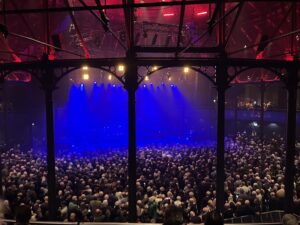
Everybody is welcome here, but there are sometimes surprising contradictions. Like the other week, I went to see The Stranglers at the Roundhouse. It was a fantastic gig on what was the worst-weather Friday night of the year, with rain coming down like sheets of glass in the pitch black of Halloween. All the Tube lines were down and, with the help of a lift (thanks Gerard!), I made it to the venue just in time.
Upstairs on the balcony, both seats either side of me were empty, so I had space to move and enjoy the music, albeit with a faint smell of damp T-shirts and wet jackets drying on bodies. As the band played Something Better Change and No More Heroes, everybody sang back with some passion and a little bit of force, capturing the punk spirit of the crowd, or maybe the city, or maybe the world, but certainly some of London. At least that’s what it felt like.
While enjoying the thump and push of the old punks (now in their 70s, but still got it), I thought of the Zeds: Zohran Mamdani and Zack Polanski. The Zeds would make a good punk band, with punk politics. Zohran could rap. Maybe Zarah Sultana could join.
After the gig, which I loved, the rain had stopped, so I walked to Chalk Farm and my Uber arrived promptly at the station. As with all the best conversations I’ve had in London, they’re always with drivers. I got in his cab and we struck up a chat. He asked me where I’d been, and I told him I’d seen a band at The Roundhouse.
He asked what sort of music they played, and I told him about punk and post-punk and the Seventies and Eighties and the charts, all of which he seemed to enjoy. He didn’t know Golden Brown, despite my attempts at humming it. As we spoke, I noticed a familiar scent.
“Wow, sorry to ask, is that patchouli oil I can smell?”
“It’s whatever my mum told me to buy and use for cleaning my car,” he laughed. “What is patchouli oil?”
“It’s a fragrance oil Goths used to wear, and some still wear. I love it.”
“I think Goths are very cool,” he said.
I thought: This guy’s already a legend.
“Well, that’s five stars for you,” I said. “Six if you include your mum’s recommendation.”
He told me he came to London from West Bengal ten years ago. He said he wouldn’t have learned anything about the world if he hadn’t moved here. I agreed with him, and we had a fun conversation, listing all the foods we’ve tried in London. His list far outdid mine: I talked about Lost Souls pizza in Camden, spicy curries from Brick Lane and excellent chips from The Big Bite in Willesden. But my driver had tried jerk dishes from Brixton, Chinese bao buns from Soho, Vietnamese pho from Shoreditch, Turkish pide from Dalston, and Ethiopian stews from Peckham.
He said he had arrived in the city with nothing (I didn’t ask if he brought a cuddly toy) and worked his way into a place to stay, a couple of jobs, money in his pocket. Obviously, I identified with this, and we discussed the opportunities London had presented us with. He went on to say he loved the city but felt annoyed with those “who come after him”. I didn’t understand why he was bitter about new people coming from India.
“They’re getting it all on a plate,” he said. “I had to work for it.”
“What are they getting?” I asked.
“Everything! Money, houses, food, everything!”
“Are these people you know?”
“I don’t know them personally,” he said, “but I’ve heard it! It’s true, believe me.”
The destination of his words wasn’t where I wanted to go, so I fell quiet and tried to make no judgements of my patchouli-scented driver in the Goth-mobile.
But of course, I couldn’t shut up for long.
“Don’t you feel a bit proud?” I asked him.
“What do you mean?”
“We scratched our way through, didn’t we? I mean, London helped us. Maybe it’s because of our experiences we’ve made it easier for others like us to follow after. Those with the same dreams and hopes? I’d rather help them.”
“Maybe, uh, I don’t know about that”, he said. “It was very tough.”
I went on to tell him stories of when I arrived in London, and how it wasn’t easy at first: bedsits with infested mattresses, shared house toilets, rats, and my regular dinner – a block of cheese to grate and last a week, a potato for five pence to make a jacket, and a three pence onion to chop.
It was microwaved tatties and grated cheese every night until payday, until a brilliant boss – Graham Singleton at Ogilvy – saw a glimmer of potential and pivoted me on my way to a great career. (What he actually said was: “You just seemed so keen, I couldn’t not do it). That same boss also gave me money and told me to go and buy some “office” clothes, and that was the end of the fringey skirt fire hazard at the photocopier.
“I had it tough too,” I told the driver, “but London offered me much more opportunity than there was at home. I feel like it always has, and still does that for people.”
“Oh yes,” he agreed. “But not easy for us, though, was it? Easier for them that come now. Much easier.”
My turn to be quiet again. Then he speaks.
“But it is a great city. Doesn’t matter where you’re from, everyone can make a living here. All kinds are welcome.”
The car pulled up outside my house.
“Where are you from, originally?” he asked.
“I’m Scottish. I suppose you could call me a domestic immigrant.”
“Ah! Or a Goth!” he replied, smiling.
The Prius whirred off down the road. I turned the key in the front door, and went back to thinking about The Stranglers. I made a mental note to to see Hugh Cornwell’s then upcoming gig at Islington Assembly Hall and find out what Stranglers tracks he’d pack into his solo setlist.
I sat down on the couch. Strange Little Girl was home, and thinking of baked tatties.
OnLondon.co.uk provides unique coverage of the capital’s politics, development and culture with no paywall and no ads. It is funded by subscribers to publisher and editor Dave Hill’s twice-weekly newsletter On London Extra. To receive it, become a paying subscriber to Dave’s Substack or followany Support link on this site.
The deputy chief executive of an influential business group talks about closing the gap between what employers need and what Londoners can offer - add the upcoming budget
A paradox of London is that its schools and universities are very good, yet too many of its people lack the skills they need to take advantage of the city’s opportunities.
Unemployment in the capital is high and rising, especially in its poorest areas. At the same time, employers frequently complain that they can’t find the workers they need. How can the gap between what firms in London need and what Londoners can offer them be closed?
My guest for the latest episode in my endearingly rough and ready podcast series, True London, is Muniya Barua, deputy chief executive of BusinessLDN, which represents many of the capital’s larger employers and lots of its universities and further education institutions.
She explained to me the various reasons why matching labour supply to employer demand is not an easy task in the capital, and talked about the London Local Skills Improvement Plan, a government-funded, employer-led initiative for working with education institutions and others to better equip Londoners looking to get into work or to secure better jobs than they currently have.
In the last few minutes of our conversation, Muniya reflected on the pre-budget news that the government is set to back an extension of the Docklands Light Railway south of the river into Thamesmead – a scheme Sir Sadiq Khan and Transport for London have long had ready to go – and likely to give the Mayor powers to raise a visitor levy (or “tourist tax”) in the capital. She also has some thoughts on the funding of London local government.
Read more about Capital City College here, London South East colleges here and New City College here. For more information about unemployment in London, see Trust for London’s analysis from earlier this year. Photo from BusinessLDN.
OnLondon.co.uk provides unique coverage of the capital’s politics, development and culture with no paywall and no ads. It is funded by subscribers to publisher and editor Dave Hill’s twice-weekly newsletter On London Extra. To receive it, become a paying subscriber to Dave’s Substack or followany Support link on this site.
It is often said that death and taxes are the only two certainties in life. Most Londoners would add a third – that e-bike riders will run red lights, and worse.
Even so, perhaps given a further nudge by September’s Tube strikes, this form of bike hire looks to set to stay and grow in London – and it’s clear that our built environment, planning rules and political leaders need to respond accordingly.
In today’s economic climate it is increasingly convenient to use an electric bike rather than to save up for, buy, and then store a new pedal bicycle, especially for young people. On top of that, the forthcoming budget may see the end of the government’s Cycle to Work scheme, and bike theft in London is 186 per cent higher than the national average.
It is therefore clear that the capital’s future is bike-led – but with Lime, Forest, Voi and also “Boris Bikes” to the fore.
What needs to be done to make this work well? For one thing, there must be better London-wide cooperation. Currently, places such as Chiswick Bridge act as 21st century versions of the Berlin Wall, because Hounslow priorities Forest and Voi, while Richmond has a license with Lime. Comedian Dara Ó Briain has called it ‘Checkpoint Charlie’ after the east-west crossing in Berlin during the Cold War, and there’s a risk of this proliferating along the Thames, which forms a boundary between many London boroughs.
The design of buildings and streets needs to change too. On-street parking bays are the storage space of tomorrow. Current London Plan guidance is for homes in highly sustainable locations to aspire to being ‘car free’. This forces developers to make space within often constrained urban locations for hundreds – and in some cases thousands – of storage spaces for conventional bikes and those who own them.
The proposed changes to these regulations, recently announced, include more flexibility around this rule to facilitate the viability of schemes – a sensible move, given that housing delivery in London is under unprecedented pressure and every square metre needs to be used. And boroughs should also consider allowing developments to ‘pool’ their cycle spaces and make it possible for spaces left unused to later be converted to additional homes.
With such provisions and freedoms must come a greater sense of responsibility. There need to be more penalties for riders and operators for bad behaviour. More dedicated parking spaces must come with better parking practices, more self-policing from operators and greater geo-fencing – virtual perimeters placed around specific areas – to ensure slower e-bike speeds in some of London’s most famous and special locations. The rise of so-called Lime Bike Leg breaks show that accidents are putting additional pressure on the NHS.
There is a growing need for City Hall, Transport for London and the boroughs to coordinate these processes. It has proven difficult to do this, even with a single political party, Labour, dominant in London government. It won’t get any easier after May’s borough elections, which opinion polls suggest could see a much more mixed set of Town Hall administrations. The e-bike revolution is underway and the clock is ticking.
OnLondon.co.uk provides unique coverage of the capital’s politics, development and culture with no paywall and no ads. It is funded by subscribers to publisher and editor Dave Hill’s twice-weekly newsletter On London Extra. To receive it, become a paying subscriber to Dave’s Substack or followany Support link on this site.
London is to receive a major infrastructure boost in the government’s budget next week, with Chancellor Rachel Reeves expected to announce her long-awaited backing for an extension of the Docklands Light Railway into Thamesmead.
The funding deal, which will enable the railway to reach one of the capital’s largest regeneration areas, is expected to draw in around £18 billion in private investment and lead to up to 25,000 new homes built.
Sir Sadiq Khan has welcomed the move as “a massive vote of confidence in London”, having previously expressed disappointment that no major infrastructure deal for the capital was included in Reeves’s spending review package, announced in June.
“I look forward to working hand in hand with ministers to deliver this vital project as we continue building a more prosperous London for everyone,” he said.
Reeves appeared to snub London in her spending review speech, saying she agreed with the complaints of politicians in the north of England that “areas outside London and South East” had been underinvested in.
However, as On London reported, transport secretary Heidi Alexander, formerly Mayor Khan’s deputy for transport, wrote to Transport for London to inform it that the government recognised the “potential housing and economic growth” a DLR extension could stimulate and acknowledged the “substantial work” already done.
Alexander added that she would be working with TfL and City Hall to finalise a business case “by the autumn”. TfL plans show the extension going from Gallions Reach station in Newham via another new station in Beckton and into Greenwich south of the Thames
The subsequent recommendation by the government’s taskforce that Thamesmead be designated a London New Town area made the case for giving a green light to the DLR project seem overwhelming.
With a deal now apparently done, City Hall has quoted a Treasury source saying: “This budget will choose growth over austerity by supporting renewal in every part of the country.”
Backing for the DLR extension was one the principle requests Khan made of the budget for London, backed by BusinessLDN, which represents some of the capital’s largest companies, and by the Peabody housing association which is leading a major improvement and redevelopment of the wider Thamesmead area, part of which is in Bexley.
Writing for the BusinessLDN website last week, Peabody chief executive Ian McDermott underlined the case for the DLR scheme, saying Thamesmead “offers one of the most exciting and deliverable opportunities for housing and economic growth in the UK”.
Reeves is also expected to give City Hall and other London leaders the powers needed to raise levies on people using the capital’s hotels and other stay-over accommodation, another measure the Mayor along with some borough leaders has been lobbying for.
OnLondon.co.uk provides unique coverage of the capital’s politics, development and culture with no paywall and no ads. It is funded by subscribers to publisher and editor Dave Hill’s twice-weekly newsletter On London Extra. To receive it, become a paying subscriber to Dave’s Substack or followany Support link on this site.
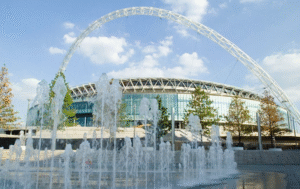
London is one of the most exciting cities on the planet. People travel thousands of miles just to spend a weekend here, whether it’s to see a West End show, a football match at Stamford Bridge, a gig at the O2, or England’s cricketers at the Oval. Wembley Stadium (pictured) and Wembley Arena are on my doorstep in Brent.
In 2023, over 20 million overnight visitors came to London. That’s more than half of all UK overnight tourism, pumping £27 billion into the economy and supporting 700,000 jobs. Last summer alone saw Brent proudly welcome 1.5 million Oasis and Coldplay fans to Wembley. It’s a great success story and something I am deeply proud of as someone born and bred in the Wembley area.
But there is another side to it. Hosting the world comes at a cost, and right now it is being paid by Londoners locally. Big events mean more rubbish to collect, more streets to clean, more enforcement to keep things safe. It’s our bin lorries, our street sweepers and our community safety teams who make sure London looks its best – and all of that is paid for out of already overstretched council budgets.
Other global cities have found a fair solution: a visitor levy. It’s a small, locally-set charge on hotel rooms or short stays, with the money ringfenced for local services. In Rome and Paris it is the norm – and it is becoming so in Edinburgh and Cardiff, too.
Some fear that these modest levies put off tourists, but the evidence is clear – they don’t. Recent research by Centre for Cities shows that visitors are not deterred by them and that London is an outlier as the only major G7 city that doesn’t have one. Bloomberg analysis has estimated that a levy for London could raise around £500 million a year – money that could go straight back into local services providing for visitors and residents alike.
When you went on a city break in Europe or further afield, did a charge of a euro or a dollar a night charge stop you? These small charges don’t scare off tourists and they give local communities a fair return for hosting them.
That’s why I, along with 10 other London leaders representing over three million Londoners, wrote to the government calling for a rethink. Now is the time to amend the English Devolution Bill and finally give local authorities the power to introduce a visitor levy, in consultation with their residents and businesses.
We are encouraged by local government secretary Steve Reed’s early steps with helping councils restore “pride in place”. But this can only be truly achieved if councils are given the fiscal and policy autonomy they desperately need. Other global cities have shown a different path, where such schemes are designed locally and the benefits flow directly back into their communities.
Crucially, I strongly believe that any visitor levy must be flexible, designed by London boroughs, and its proceeds spent on the priorities of local people – no differently to the new Pride in Place programme, where a neighbourhood board calls the shots on the way the funding should be spent.
London’s visitor economy is incredibly diverse – what works in Brent won’t necessarily work in Bexley or Bromley. And local leaders are best placed to balance the benefits of a levy against any risks to local tourism, adjusting the approach if needed. As the Institute for Government articulates, if a high visitor levy diverts tourists away from one borough to another, the policy can be recalibrated. But if it allows reinvestment into improved local transport and a more attractive public realm, it may benefit local residents and attract more visitors at the same time.
With Rachel Reeves now reportedly considering how such powers might work in London, it’s worth being clear about what genuine, local devolution really looks like. I’ve always backed stronger local powers.
But true devolution should benefit both London’s boroughs and the Mayor of London. If councils are the ones who’ll explain, run and collect this levy, then we must be around the table when it comes to shaping the design and the priorities for its use. London works best when its strategic and local tiers move in lockstep, each bringing their own strengths to the table.
A well-designed visitor levy is a simple yet meaningful idea – fair and proven to work elsewhere. Small change from visitors could mean cleaner streets, greener parks, and more funding to help us address the cost-of-living crisis in this city.
London will always roll out the red carpet for the world. But if we want to keep the ball rolling and the music playing for the rest of the world to enjoy, it’s time Londoners saw a slice of that success too.
I am therefore urging the Chancellor to give councils the powers to introduce a locally-led visitor levy and ensuring that those who’ll be delivering it on the ground are placed front and centre of any arrangements, so we can safeguard essential services and ensure our residents see a fair return from the millions who benefit from our city every year.
OnLondon.co.uk provides unique coverage of the capital’s politics, development and culture with no paywall and no ads. It is funded by subscribers to publisher and editor Dave Hill’s twice-weekly newsletter On London Extra at a cost of £5 a month or £50 a year. To receive it, become a paying subscriber to Dave’s Substack or followany Support link on this site.






You must be logged in to post a comment.