Blog

Lambeth: Second newly elected Green councillor resigns

A second newly elected Green Party member has resigned from Lambeth Council, creating the potential for Labour to become the borough’s biggest party group

Joanna Eaves, who was elected to represent Clapham Park ward on 7 May, has stepped down due to ill health, according to a statement from Lambeth Greens.

Eaves was one of 29 Greens elected in Lambeth, as Labour lost control of the borough for the first time since 2002 and was reduced to 26 seats with the Liberal Democrats winning eight.

Her resignation follows that of Saiqa Ali, whom the Greens confirmed following her election had already been suspended by the party following her arrest in late April – along with another Lambeth Green candidate, who wasn’t subsequently elected – on suspicion of stirring up racial hatred online with alleged antisemitic material.

Eaves’s departure means the Greens are now down to 27 Lambeth councillors. By-elections will have to take place so that new councillors can be elected, giving Labour hope of overtaking the Greens as Lambeth’s biggest party. Were they to win both by-elections, its total would rise to 28 seats while that of the Greens would stay at 27.

The three-seat Clapham Park ward produced a split result on 7 May, with Labour candidates finishing in first and second places, followed by Eaves in third and another Labour candidate just 37 votes behind her in fourth place.

Ali, whose name remained on the ballot paper despite her arrest, was elected in third place in Streatham St Leonard’s ward. A Labour candidate came fourth with 1,084 votes compared with Ali’s 1,437, a difference of 353.

The by-elections will not take place until after the date scheduled for the first meeting of the new full council on 27 May, when the leader of the council is due to be elected.

Assuming all of the current and remaining 61 councillors attend and vote on party lines, that leader will be either a Green or a Labour councillor, depending on what the Lib Dem group does.

A Green will be elected leader if the eight Lib Dem councillors back the Green candidate or if they abstain, as the Greens still have the largest group of councillors despite the two recent resignations. However, if the Lib Dems choose to back the Labour candidate for leader, a Labour leader will emerge.

Labour is understood to have been talking to the Lib Dem group about some form of post-elections cross-party co-operation, though no details have yet emerged.

Follow Dave Hill on Bluesky and at LinkedIn.

OnLondon.co.uk is funded by sales of publisher and editor Dave Hill’s twice-weekly newsletter On London Extra. To receive it, become a paying subscriber to Dave’s personal Substack. Thanks.

Categories: News

Julie Hamill: Return of Camden’s Black Cap

I remember going to The Black Cap in the 1990s with my friend Martin. It was dimly lit venue with lots of dark wood and torn posters. It needed a lick of paint and a few repairs, but when the stage lights went up and the drag queen came on, it was a celebration like no other.

The Georgian building has stood on Camden High Street since 1751. From the mid-1960s it became the home of drag, with acts such as Mrs Shufflewick, Danny La Rue, Hinge and Bracket, Maisie Trollette, Lily Savage and Regina Fong appearing regularly. All brought flamboyance, wit and sharp comedy that united the room in laughter and song. From then on The Black Cap earned its billing as the “Palladium of Drag” and established itself as north London’s vital safe space for queer entertainment.

In 2015 its doors were closed after plans were unveiled to convert the building into flats. In response, supporters of the We Are The Black Cap campaign staged protests for nearly 12 years, repeatedly standing outside the venue on Saturday afternoons. “They didn’t count on the community’s resistance,” they write of their mission to defend the venue’s history and the thousand reasons why it mattered.

Endurance paid off, and in March The Black Cap reopened to an emotional celebration. The Palladium of Drag has been revived, with appearances from Baga Chipz, Victoria Scone, Tiana Biscuit, Polly Glamorous and many more carrying the “Cap-baret” into the next decades.

Arriving at the venue, I take a tour with Raphael Motycki, the new general manager. The tiled Mother Black Cap mural on the left-hand wall of the entrance, dating from 1776, has been newly restored. It tells the eerie 18th Century story of a man disguised as a woman, wearing a cape and black cap, hiding from the law. Raphael tells me that many people believe it’s the first-ever image of a drag queen.

Most notably, a square viewing hatch remains on the downstairs front doors. In the 1960s, this was opened and closed to check for police raids. The historical significance of that hatch stays in my mind as we tour the new surroundings – a relic of a different time.

The layout inside is the same as it was before, with the long narrow downstairs bar on the right and the stage at the end of the room. But it looks as if a wand has been waved and turned it into a queen’s palace.

More than £2 million has gone into the renovation, with plush velvet banquettes in deep reds and rich greens, gold fringe lounge lighting, glowing neon signs and tastefully framed photographs of past performers who have graced the stage.

There are thoughtful details everywhere. Curated memorabilia include a pair of Lily Savage’s earrings, donated by Paul O’Grady’s husband, with “Too glam to give a damn” quoted underneath. The DJ booth is built from a converted church pulpit, and the stage has a retractable catwalk which allows performers to be close to the audience.

New facilities include two disco toilets, one of which is fully wheelchair accessible. When there, you can press an emergency button, disco lights will flash and Kylie or Gloria will blast out to join you in your private moment.

The upstairs Shufflewick bar is more refined. The updated roof terrace, due to open the day after my visit, carries a blue plaque honouring Fong as “Her Imperial Highness the Grand Duchess” and “Last of the Romanoffs.” As Raphael points things out, it’s clear that his warm, infectious energy is yet another light bulb that adds to the sparkle of the place.

There are tons of stories behind the candelabra of The Black Cap, including Raphael’s own. He came to London from Poland 16 years ago for an X Factor audition. Singing jazz, he made it through to the second round, with Simon Cowell offering encouragement and industry contacts and telling him he was a true artist. Raphael fell in love with London and decided to stay. “The community and society is so nice in this city. I was immediately hooked by its openness,” he says. “Being extraordinary is rewarded in London.”

I love it that he said that, and he goes on to tell me he was recommended for the The Black Cap role by a colleague whom he had worked with at a bar in Maida Vale. She knew he’d be perfect and sent him forth to meet the owners. “I like to think that The Black Cap is calling the right people,” he says.

He mentions that getting the place open again is a credit to those who held the weekly vigil: “It never stopped until we reopened. The protesters, Camden Council and investors met in the middle. It shows that if people can listen to each other, miracles can happen. North London doesn’t have an LGBTQ+ scene and people are grateful for it. We have to keep a safe space for queer people. That’s what we are focusing on – inclusivity for everyone. Plus, I think beautiful spaces are needed!”

We walk around upstairs as he shows me some of the new £200-a-night hotel rooms. Each is stylish, theatrical and unexpectedly calm, with names like “The Miss Behave Suite”, “The Imperial Suite”, “Masquerade” and “Maisie Trollette’s Legacy Room”. In one of the rooms there’s a piece of art, a standard (man) lamp, which I love.

“That lamp can be a bit scary when you wake up in the night,” Raphael laughs.

“I like him!” I reply, “I’d love to stay in this room!” And then he tells me about the ghosts…

“We have three ghosts in the building, but don’t worry, they’re all in the basement!”

“As you like him,” he says, pointing to the lamp, “we should name him. Who do you think?”

“He looks like a Julian,” I say.

“Julian, that’s it!” he claps. “Everybody who comes here adds something. I take a piece of everyone and keep it here. I will get a little name for between his feet!”

I’m overjoyed that I’ve been honoured with the christening of Julian the man lamp, and as we head back out onto the roof terrace I ask Raphael whether he thinks The Black Cap’s customer profile has changed.

“I don’t think it is different,” he replies. “We wanted to keep the spirit of the old Black Cap. It was inclusive before inclusivity was a thing. Everyone was welcome here, and everyone is still welcome. We want people to show up and have a good time – a community to come together.”

It seems Raphael is just getting started. He has plans to get a wedding licence and to add live music on the roof terrace. He has even reached out to Banksy, inviting him to paint an exposed brick wall.

We head back downstairs and hug goodbye. He pauses to reflect: “You know, as soon as I saw the shutters, how they used to check through this hatch for the police, I realised how lucky I am to live as a gay man today, when, back then, it was criminal just to be me.”

Now, the lights are on, the doors are open, and everyone is welcome at The Black Cap. As Raphael put it, “Being extraordinary is rewarded.”

Follow Julie Hamill on Instagram. Photo from We Are The Black Cap Instagram.

OnLondon.co.uk and its writers are funded by sales of publisher and editor Dave Hill’s twice-weekly newsletter On London Extra. To start receiving it, become a paying subscriber to Dave’s personal Substack or follow any Support link on this site. Thanks.

Categories: Culture

Charles Wright: London’s extraordinary young carers

London’s unpaid carers number in the hundreds of thousands – perhaps 600,000 at least, according to the most recent Census, saving the NHS billions a year. They constitute an “invisible workforce” without which our health and social care systems would collapse, says a new report from the London Assembly.

And young carers are perhaps the most invisible of all, according to Carla Brain, manager of the young carers service at Enfield Carers Centre. Awareness is key, she told the Assembly’s evidence-gathering session earlier this year. “There are thousands and thousands of children caring out there, and because they are not being identified and there are so many hidden young carers, it is difficult to get the support and funding they need because we do not have accurate numbers.”

That’s certainly an issue in Enfield, Carla explained when I visited the centre last month. The government’s annual school census started recording pupils identified as carers in 2023, but getting the full picture is very much a work in progress. “We support more than 600 young carers in Enfield, and there are going to be so many more out there, but the schools only recorded 80 in our borough in 2023, and that was down to 57 the following year,” she said. “We know that’s not accurate. There will be so many more who are not registered with us.”

It’s not always straightforward. As is the case with their adult counterparts, young carers, and sometimes their parents too, don’t necessarily see what they are doing as being a “carer” rather than just helping, said Carla. But a survey last year for the national Carers Trust network revealed a stark reality: as many as three in five young carers aged between eight and 17 spend at least three hours a day caring, including almost half of eight to 11-year-olds.

Young carers take on significant responsibilities: getting people to hospital appointments, dealing with medication, cooking and cleaning, housing issues and more. One nine-year-old registered with the centre was effectively managing the family finances, said Carla. “They could tell us all about what benefits were claimed, the household income, the tenancy arrangements, issues with the landlord…”

Some will be looking after siblings too, as well as a parent or grandparent. A 12-year-old supported by the Enfield service was caring for five family members in all, Carla said, with conditions including autism, cerebral palsy and cancer. “People don’t realise what these young people are coping with. And the incredible skills they develop,” she added.

Caring takes its toll. Young carers can struggle to balance school with their responsibilities at home, falling behind, not finding enough time for homework, even going absent. Separate Carers Trust research suggests young carers are missing 23 days of school every year on average, often severely limiting their opportunities as they move into adulthood. They can miss out too on friendships, hobbies and extracurricular activities and can be targets for bullying.

Supporting young carers’ education is a big part of Carla’s work, from homework clubs to one-to-one help and liaison with teachers, who may not fully understand pupils’ home lives. “It’s so important that young carers are recognised as early as possible and support is in place,” she said. There’s family support too, and training sessions, in First Aid, financial literacy and managing in particular conditions such as autism or dementia, as well as signposting to specialist help where required.

But it’s also simply about providing a space for young carers, said Carla, to “ask questions”, to feel “less alone”, to get together with other young carers. And for respite – there’s a busy programme of music and drama sessions, trips to the cinema, holiday outings to the seaside, to museums, or to see the Lion King in the West End – “opportunities they haven’t had before”. Teenage carers from Enfield have been active campaigners too, recently speaking at Carers Trust conferences and addressing parliamentarians.

There are funding pressures in Enfield and across the capital. Councils have statutory responsibilities, in particular for assessing carers’ needs. But the London Assembly investigation found that with no overall city-wide strategy in place the actual level of support then provided varied from borough to borough, and was often “limited to signposting to information and advice”, while voluntary agencies working in the field were “hampered by a lack of stable and predictable funding”.

The London Assembly report calls for ring-fenced multi-year funding for carer support services, and urges Mayor Khan to both work with the NHS, boroughs and local carer organisations on a “unified protocol” for identifying carers, and to put his weight behind the Carers Trust and Children’s Society Young Carers in Schools programme, which helps schools identify and support young carers. A mayoral awareness-raising campaign on public transport, “helping children to think ‘maybe I am a young carer’,” would be helpful too, Carla told London Assembly members.

Meanwhile, though Enfield Carers Centre’s work on assessment and support for adult carers is council funded, there is no commissioned young carers service in the borough. Carla’s team currently relies on a National Lottery grant, which will run out at the end of this year. Their bid for further funding has cleared the preliminary hurdle, but there are no guarantees. It’s an anxious period then, investigating other potential funding sources, refining bids, and waiting. “If funding goes,” said Carla, “we can only signpost. But I have no service that I can refer those 600 children to.”

Follow Charles Wright on Bluesky. Image from Create Charity video.

OnLondon.co.uk is funded by sales of publisher and editor Dave Hill’s twice-weekly newsletter On London Extra. If you don’t already receive it, become a paying subscriber to Dave’s personal Substack or follow any Support link on this website.

Categories: News

Barnet: How will the council’s new leader be chosen?

The most finely-balanced of the capital’s seven No Overall Control council election outcomes – nine if you include Croydon and Newham despite them having executive Mayors at their helm – was Barnet.

The Conservatives had been hoping to regain control there, having lost it to Labour in 2022, but they didn’t quite make it. As a result, Barnet’s 63 council seats have been filled as follows:

  • Conservative 31
  • Labour 31
  • Green 1

Which party, then, will be in charge?

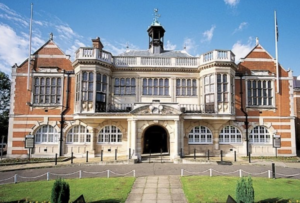
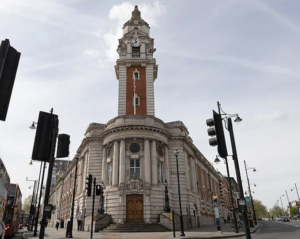
On the evening of 19 May, next Tuesday, the first full council meeting of the new four-year term is due to take place at Hendon Town Hall (pictured).

The agenda shows (below) that the election for the appointment of the council leader is the third item on the agenda, after Prayer and Apologies for Absence.

Item four is the election of the borough’s civic mayor, a job of key importance in resolving this No Overall Control scenario, because its responsibilities include chairing full meetings of the council.

Screenshot 2026 05 13 at 15.47.09

Both the Conservative group of councillors and the Labour group can be expected to be nominating their leaders – respectively, Peter Zinkin and the still-current leader Barry Rawlings – to be appointed leader the council for the start of the new term.

Assuming all 31 Tories and all 31 Labourites are present for the leadership appointment part of the meeting, we can, of course, expect that they will vote for their own candidate. And you will already have worked out out that such a situation would leave the lone Green councillor, a woman called Charli Thompson, in a position of considerable power.

If she votes for the Conservatives’ choice to be leader, he will, by a margin of 32 to 31, become the council’s leader.

If she votes for the Labour nominee, she will keep him in place as leader, again by 32 votes to 31, a majority of one.

But what if – as seems very possible – she abstains? That would leave the council in deadlock at 31 votes each. So how would a decision be made?

A tie-break solution would lie in the hands of the civic mayor. It is a role allocated to a serving borough councillor on a one-year basis, and being an impartial chair of meeting of the full council is one of its main responsibilities. With that responsibility comes a certain power – the power to use a casting vote to break the deadlock if a full council vote end in a draw.

The Mayor of Barnet at the moment, and as for the past year, is Danny Rich, who, on 7 May, was re-elected for West Finchley ward. Rich is a Labour councillor. With the election for Mayor of Barnet scheduled to take place after the appointment of the council leader, he is due to be chairing the full council meeting while the leadership decision is taken. If called upon to exercise his casting vote, the likelihood would seem to be that he wouldn’t use it to instal the Conservative candidate as council leader.

Of course, as we have seen, it might not come to that. After all, Green councillor Thompson could, at least in theory, confound expectations by taking sides with one or other of her opponent parties for some reason. That said, the chances of either the Conservative or the Labour group seeking or even wanting her support appear slim.

Jewish News has reported that Thompson has confirmed previously being a member of the Chipping Barnet Constituency Labour Party and a supporter of Jeremy Corbyn, and that she declined to discuss past social media posts on the subject of antisemitism. Barnet famously contains the largest number of Jews of any local authority in England, some of whom have lately been victims of violent antisemitic attacks.

Conclusion? The odds appear to be on Barnet Council continuing to be led by a Labour politician from 19 May – and, for the very same reasons, continuing to have a Labour councillor as civic mayor chairing full council meeting, bringing their casting vote into play as and when required.

That’s not to say things will definitely turn out that way. One or more councillors might not turn up, thereby altering the delicate arithmetic. Procedural issues previously unthought of could disrupt the scenario described above. One week from now, all will have become clear – or perhaps unclear, as the case may be.

Follow Dave Hill on Bluesky and at LinkedIn.

OnLondon.co.uk is funded by sales of publisher and editor Dave Hill’s twice-weekly newsletter On London Extra. To receive it, become a paying subscriber to Dave’s personal Substack. Thanks.

Categories: Analysis

Westminster: Council’s new Tory leader lists possible grounds for Oxford Street pedestrianisation legal challenge

Westminster City Council’s newly-elected Conservative leader, Paul Swaddle, took the opportunity yesterday evening to set out his priorities for the next four years.

They included a vow to “get Westminster building again”, a pledge to use every power available to make the borough’s streets more safe and hospitable, and a disclosure that earlier in the day he had instructed Westminster’s chief executive officer to “seek legal advice to fight the Mayor” and “look at all the legal avenues that are available to us” for thwarting Sir Sadiq Khan’s plans for transforming Oxford Street, including with pedestrianisation.

Swaddle was speaking (from 41 minutes, below) as one of the guests at a live session of Political Business, podcast of public affairs specialists Lowick Hedry, held at a venue near King’s Cross station. He accused the Labour administration he has just ousted of failing to “put up a fight” against the scheme, even though it too opposed it.

The new council leader had already promised that a legal challenge would be mounted. This following the Tories’ recapture of Westminster last week, having lost control of it in 2022 for the first time in its history. Addressing an audience that included fellow councillors and advisers from a variety of parties plus online viewers he listed possible areas for a such action, a path Labour had chosen not to follow.

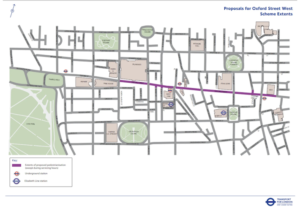
The focus would be on what he called “the technical details” such as Transport for London’s consultation about the proposals, the formation of the Mayoral Development Corporation (MDC) responsible for delivering the transformation programme, issues relating to repairs and maintenance in the vicinity of Oxford Street but outside the MDC boundary.

In March, Mayor Khan expressed his wish to see the pedestrianisation by the end of the summer of the section of the street stretching westwards from Great Portland Street through Oxford Circus to Selfridges department store and Orchard Street. At that time, Swaddle claimed “the consultation was fudged” and that Khan had “totally abused” the MDC model, which has previously been used, both times during Boris Johnson’s period as Mayor, to bring the development of the Olympic Park in Stratford and the regeneration of the Old Oak and Park Royal area in north west London under City Hall control.

Local opposition to the Oxford Street plan was a significant factor in the election campaign, notably in the marginal West End ward, which saw Labour win all three seats in 2022 but returned a trio of Tories last week. Responses to TfL’s two Londonwide consultations have firmly favoured the Mayor’s approach and a 2024 YouGov poll found that 63 per cent of Londoners supported Oxford Street becoming “a pedestrians-only street” compared with 23 per cent who opposed it.

Swaddle said the council’s “biggest concern is about accessibility”. He pointed out that Oxford Street is a mile long and argued that “a lot of residents and visitors rely on the buses to get up and down Oxford Street”, noting also that Oxford Circus station doesn’t have step-free access.

Elaborating on why he wants to increase property development in Westminster, Swaddle told the Political Business audience that the council needs the additional income from the Community Infrastructure Levy – a form of local tax raised from developers as a condition for giving them planning consent – and wants to see more homes built for local people in the “squeezed middle” groups in terms of income, such as teachers.

He also said he had appointed a cabinet member for enforcement, and emphasised his wish to see a reduction in phone thefts, improved cleanliness, action against cycling on pavements and the efficient clearing away of dockless hire bikes left lying about.

Last update at 19:00, 12 May 2026. Follow Dave Hill on Bluesky and at LinkedIn. Image from TfL.

OnLondon.co.uk is funded by sales of publisher and editor Dave Hill’s twice-weekly newsletter On London Extra. To receive it, become a paying subscriber to Dave’s personal Substack. Thanks.

Categories: News

Tim Donovan: Who will run London’s No Overall Control boroughs?

What is going to happen in the record nine councils in London where no party won a majority of councillors? At this stage, few of the players themselves will know the outcome. But here are the tasks facing those No Overall Control authorities.

Barnet: Labour and the Conservatives ended up with 31 seats each. There is one Green councillor, Charli Thompson, who holds the balance of power. Judging by coverage of her in Jewish News, she may not be looked on favourably by either of the two competing groups as someone to form an alliance with. And what will she herself decide to do? The situation is due to be addressed on 19 May at the first meeting of the newly-elected council membership. On London‘s explainer is here.

Brent: Labour finished on 26. The Tories and Liberal Democrats each have 11. There are nine Greens. Whether either or even both the Greens and Lib Dems are prepared to do business with Labour is an interesting question. None are likely to get into bed with the Tories. Many locally may remember how fractious things got between the Tories and Lib Dems in 2006, the last time they co-habited in the borough.

Croydon: The mayoralty stayed with the Tories’s Jason Perry. The council line-up is more complicated now – Labour 30, Conservatives 28, Greens eight. Lib Dems and Reform two each – but remains without a majority, with Labour and the Conservatives the most numerous, as before. The executive powers enjoyed by the Mayor, and the need for a two-thirds majority of councillors to block or amend his budget mean he will the senior figure.

Enfield: This contest ended with the Conservatives on 31, Labour on 27 and the Greens on five. The Conservatives were just one short of a majority. The Green have already said they will discuss with the Tories working together on opposing plans for housing development on Green Belt land, which now take the form of a Labour government backed New Town. But might they also collaborate with Labour on other policies? It seems likely that the Tories will attempt to run a minority administration, progressing issue by issue.

Haringey: As predicted by some clever MRP polling but still with the capacity to surprise, Labour lost its hold on this borough, shedding 30 councillors and finishing on 21. They were eclipsed by the Greens on 28. There are eight Liberal Democrats. You would assume that the Greens will seek to partner with the Lib Dems, but it’s early days. It’s not clear how prepared the Greens will have been for such a result.

Lambeth: This was one of the last counts to wrap up and the result was on a knife edge. The Greens finished as the largest party on 28, ahead of Labour on 25 and the Liberal Democrats on seven, plus one Independent (a former Green suspended days before polling over sharing controversial social media posts). It is assumed that the Greens and Lib Dems – united by a loathing of Labour which has run the borough for two decades – will talk. Indeed there have been informal discussions already. No-one has made any demands yet over cabinet positions or committee roles or projects they insist on being supported. It is too early to say whether they might enter a formal coalition or agree the next budget and then deal with issues on an ad hoc basis.

Newham: Labour’s Forhad Hussain won the mayoralty, but the council fragmented: Labour on 26, the Newham Independents Party on 24 and the Greens on 16. These are  good platforms from which the two junior parties can launch their next mayoral campaigns in 2030. As for the immediate practical effects, as in Croydon it requires a two-thirds majority to block a directly elected Mayor’s budget and the numbers aren’t quite there. The parties could, however, have an impact with their presence on committees such as planning.

Southwark: Labour came out of this one the largest party on 29 seats with the Greens second on 22 and the Lib Dems – who have previous experience of running the borough – on 12. The likeliest outcome is that Labour and the Lib Dems will make a deal. Informal chats with that in mind are underway.

Wandsworth: The Conservatives were ahead by a whisker. Their 29 plays 28 for Labour. This one should be the easiest to predict. Holding the balance of power is Independent councillor and energy specialist Malcolm Grimston. A former senior Tory councillor, he split from the party in October 2014 in protest at plans to close a library and never came back. Discussions with his old party are likely to be constructive. One source said there had been dialogue which was genuine, warm and non-mercenary.

There are small margins involved in many of these councils and a few defections here or there could have a significant impact, as could changes of heart or unexpected successes. A senior Green Party figure told me to anticipate a few by-elections across the capital involving “paper candidates”, who stood to make up the numbers and ended up winning.

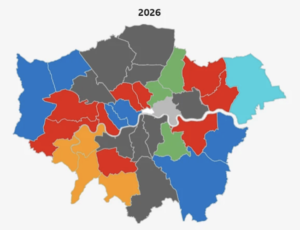
Tim Donovan is the former political editor of BBC London and now a trustee of Centre for London. Follow him at LinkedIn. Colour coded map from BBC. This piece was last updated on 13 May 2026.

OnLondon.co.uk is funded by sales of publisher and editor Dave Hill’s twice-weekly newsletter On London Extra. To start receiving it, become a paying subscriber to Dave’s personal Substack. Thanks.

Categories: Analysis

Enfield: Greens to work with Conservatives on opposing Green Belt housing

Green councillors in Enfield are to join forces with the borough’s Conservatives to oppose Labour plans for building thousands of new homes on local Green Belt land.

The Enfield Dispatch newspaper has reported that they and the Tories, who now form the largest group on the north London council but don’t have a majority, were “set to hold talks over how they can work together to save the Green Belt”

Asked about their opposition to Green Belt development, one of the Green councillors, Laura Davenport, (pictured) told the Dispatch: “I think the Tories have that in common with us”. She added: “If we want the best for the borough, we have to work together.”

The Green group holds the balance of power in Enfield, after the Conservatives won 31 seats and Labour won 27 at last week’s borough elections.

Previous, Labour-run, administrations had aspired to building on Green Belt land in the borough and in 2021 Local Plan proposals were drafted to enable over 6,000 homes to be constructed in the Crews Hill area and on farmland dubbed “Chase Park” in the north of the borough.

The proposals were criticised at the time by Sir Sadiq Khan, a long-time opponent of Green Belt development. But by early 2025, with a new Labour national government in power promising to accelerate housebuilding, he had accepted that Green Belt release had become “unavoidable” if housing need in the capital was to be met.

Then, last autumn, the national government confirmed that its New Towns Taskforce had selected the Crews Hill and Chase Park as a location for over 20,000 homes, effectively combining the areas and earmarking them for around 21,000 new homes, more than double the council’s revised plans for 9,200 in all.

The New Towns Taskforce set out an ambition for 50 per cent of the New Town’s homes to be “affordable” and make a major contribution to addressing “London’s acute housing need”. This would be a far higher proportion than supplied by the vast majority of housing developments in the capital, especially in recent years when “affordable” percentages have fallen.

Enfield Conservatives have always opposed releasing Green Belt land for development and made it a central issue in their election campaign, and conservationist group The Enfield Society has raised a petition against it.

Green Party leader and London Assembly member Zack Polanski criticised Labour’s record on “affordable” housing, claiming that the Greens would do better. The Enfield Greens’ manifesto led on promises to “protect green spaces” and “make green homes affordable for all”.

As well as opposing the Green Belt release that would enable the New Town to be built, the Green councillors in Enfield are aligned with the Tories in opposing Tottenham Hotspur FC’s plans, approved in February 2025, to build a training centre for its women’s team on the site of a former golf course in the Whitewebb’s Park area. In March, dates in June were set for a High Court judicial review hearing of a campaigners’ challenge to the planning consent.

Follow Dave Hill on Bluesky and at LinkedIn

OnLondon.co.uk is funded by sales of publisher and editor Dave Hill’s twice-weekly newsletter On London Extra. To start receiving it, become a paying subscriber to Dave’s personal Substack. Thanks.

Categories: News

London Borough Elections 2026: The Results

As expected, the 2026 London borough elections resulted in some dramatic changes to the capital’s political map, most notably Labour’s loss of control of about half of the boroughs it had won in 2022 and the Green Party’s winning control of three. It is the first time London voters have put the Greens in charge of a local authority. The same applies to Reform UK, which won one of the 32 boroughs.

At the same time, however, Labour again won more London councils than any other party and the Conservatives again won the second highest number. The Liberal Democrats retained the three they already held. The local Aspire Party retained its control of one borough.

Labour also received the largest share of the Londonwide popular vote with 25.6 per cent, though this was a big fall from the 40.3 per cent it secured in 2022. The Greens came second by this measure with 22.3 per cent (up from 11.4 per cent) and the Conservatives third with 20 per cent (down from 24.8). Reform UK got 13 per cent (up from 0.2) and the Lib Dems 12.4 per cent (down from 13.8).

Depending on how No Overall Control is defined, either seven of nine boroughs ended up that way. Two of the five boroughs that use the Mayor and Cabinet governance model did not see any party win a council majority, a situation that to some extent limits the executive powers of the Mayors.

Following post-election negotiations in the seven boroughs with no council majority and no Mayors, by 1 June, 2026 the following outcomes were arrived at:

  • Labour had majority control of nine boroughs, led minority administrations in two boroughs and held the mayoralty in one non-council majority borough. The party was therefore pre-eminent in 12 boroughs altogether.
  • The Conservatives had majority control of six boroughs, led minority administrations in two boroughs and held the mayoralty in one non-council majority borough. The party was therefore pre-eminent in nine boroughs altogether.
  • The Greens had majority control in three boroughs (and held the mayoralties of two of those) and led minority administrations in three others, making them pre-eminent in six boroughs altogether.
  • The Liberal Democrats have majority control in three boroughs.
  • The Aspire Party has majority control and holds the mayoralty in one borough.
  • Reform UK has majority control in one borough.

Labour won 696 of the capital’s 1,817 seats on 7 May, the Conservatives won 407, the Greens 297, the Lib Dems 243, Reform 79, Aspire 33 and various others, including candidates from other local parties and Independents, 60. The contest for two seats in a ward in Hillingdon was postponed until 18 June due to the death of one of the candidates.

The majority of London’s councils didn’t begin their counts until the morning after Thursday 7 May, when the elections took place. Only ten stuck with tradition and counted overnight. Some didn’t complete the job until Saturday 9 May.

London Decides, the ward-by-ward guide to the elections compiled by Lewis Baston and Dave Hill in collaboration with public affairs specialists Lowick and Hedry, is here.

This article received its final update on 30 June 2026. All figures in brackets show changes in seat numbers compared with the results in 2022.

***

BARKING & DAGENHAM: Labour hold

Con 0 (-), Green 4 (+4), Lab 38 (-13), Lib Dem 0 (-), Reform 9 (+9).

Labour’s leadership in this borough, with its recent history of support for far-Right parties, was quietly confident that it would blunt Reform’s attacks. It also correctly anticipated that the Greens would take votes from them too. But although the one-party state has fallen, a big Labour majority remains.

BARNET: Labour loss to No Overall Control

Con 31 (+9), Green 1 (+1), Lab 31 (-10), Lib Dem 0 (-), Reform 0 (-).

The Conservatives fell just one seat short of recapturing one of the three councils they lost control of in 2022, leaving the extraordinary situation of a lone Green councillor holding the balance of power between the two biggest of the traditionally big parties. However, at the council’s Annual Meeting on 19 May, Labour’s Barry Rawlings, who had led the previous administration, was appointed to continue as council leader with the help of the Conservatives.

BEXLEY: Conservative hold

Con 29 (-4), Green 0 (-), Lab 9 (-3), Lib Dem 0 (-), Reform 7 (+7).

This looked bound to go Reform, but although the party came close to breaking through in several wards, they’ve fallen way short in terms of seats to finish third behind Labour. Interviewed last autumn, the borough’s then-outgoing Tory leader Teresa O’Neill insisted Bexley voters would stick with her party. She was right.

BRENT: Labour loss to No Overall Control

Con 11 (+6), Green 9 (+9), Lab 26 (-23), Lib Dem 11 (+8), Reform 0 (0).

There were heavy losses here for Labour, which seemed likely to hang on to a majority but in the end fell three seats short of the 29 required. In an unexpected twist, the council’s Annual Meeting on 20 May saw the Labour group strike a deal with the Conservatives which left Muhammed Butt as leader of a minority administration but was followed by his deputy disclosing that Labour’s national executive committee had banned Labour groups from reaching agreements with Greens.

BROMLEY: Conservative hold

Con 35 (-1), Green 0 (0), Lab 8 (-4), Lib Dem 6 (+1), Reform 6 (+6), Ind 3 (-2).

The Farage kite barely got off the ground here, with Reform finishing only joint third and the Conservatives, safe as houses in the end, losing only one seat compared with 2022. The Independents are from the Chislehurst Matters local group.

CAMDEN: Labour hold

Con 3 (-), Green 11 (+10), Lab 30 (-17), Lib Dem 10 (+6), Reform 0 (-), Ind 1 (+1).

This looked like a strong contender to go NOC, but Labour has clung on with a slim majority. Among those to lose a Labour seat was Richard Olszewski, the borough’s now former leader who had switched to Holborn & Covent Garden ward in the hope of staying safe, only to be unseated by three Greens. He will be succeeded by new Labour group leader Sagal Abdi-Wali. The Independent is a Your Party proxy who won under the banner Camden People’s Alliance.

CROYDON: Conservatives hold mayoralty, no council majority

Mayor: Jason Perry (Con) came first with 30.7 per cent of the vote (35,871), followed by Lab (29.7 per cent), Green (16.6 per cent), Reform (12.4 per cent), Lib Dem (6.7 per cent) and others. 

Council: Con 28 (-5), Green 8 (+6), Lab 30 (-4), Lib Dem 2 (+1), Reform 2 (+2).

A second very close mayoral result has seen Perry re-elected for a second term. The council results too are very similar to last time, with Labour again just about the largest party although newcomers Reform, the Lib Dems and, in particular, the Greens have between them made a larger dent in the big duopoly than the latter pair achieved in 2022 (though one of the Greens has been suspended by his party). The overall composition means Mayor Perry and his cabinet will be very much running the show, as before.

EALING: Labour hold

Con 5 (-), Green 5 (+5), Lab 46 (-13), Lib Dem 13 (+7), Reform 0 (-). Ind 1 (+1).

Ealing Council outcomes used to reflect those of the nation. These days it is one of Labour’s safest London boroughs. The Greens and the Lib Dems made inroads along with a single Your Party proxy (Ealing Community Independents) but Labour’s majority, though reduced, is still large. On 18 May it was reported that a newly elected Green councillor had resigned, meaning a by-election will have to be held.

ENFIELD: Labour loss to No Overall Control

Con 31 (+6), Green 5 (+5), Labour 27 (-11), Lib Dem 0 (-), Reform 0 (-).

The Conservatives came very close to winning the majority they craved, but fell one seat short of the 32 required. The outcome leaves the five Greens holding the balance of power, raises the novel possibility of they and the Tories forming some sort of alliance against Green Belt development, including the government’s New Town proposals. Early indications of that were reported by Enfield Dispatch.

GREENWICH: Labour hold

Con 6 (+3), Green 13 (+13), Lab 35 (-17), Lib Dem 0 (-), Reform 1 (+1).

This one looked holdable for Labour, but NOC was also a distinct possibility. In the end, the party won with 15 seats to spare despite a fall of 17 compared with 2022. The Greens will form the opposition group.

HACKNEY: Greens gain mayoralty and council majority from Labour

Mayor: Zoë Garbett (Green) came first with 47.2 per cent (35,720 votes), followed by Lab (35.5 per cent), Con (8.4 per cenr), Reform (5.3 per cent) and Lib Dem (3.6 per cent).

Council: Con 6 (+1), Green 42 (+40), Lab 9 (-41), Lib Dem 0 (-), Reform 0 (-).

The Greens have stormed and overrun a formerly rock-solid Labour borough, ejecting councillors who have been in their seats for many years. The new Mayor Garbett was already a councillor – re-elected in her ward, she will now have to resign her seat – and was a member of the London Assembly for two years before resigning following her mayoral win, so she has some relevant experience. By contrast, many of her new councillor colleagues have none. Garbett quite quickly announced some of the members of her cabinet.

HAMMERSMITH & FULHAM: Labour hold

Con 12 (+2). Green 0 (-), Lab 38 (-2), Lib Dem 0 (-), Reform 0 (-). 

Extraordinary to recall that this was a trail-blazing Conservative borough, PM David Cameron’s favourite, until its surprise capture by Labour in 2014. Since then, the Tories have been firmly shut out. That has continued, even in this very bad year for Labour.

HARINGEY: Labour loss to No Overall Control

Con 0 (-), Green 28 (+28), Lab 21 (-29), Lib Dem 8 (+1).

The Greens came tantalisingly close to another win here, devouring wards in the centre-south of the borough and taking other seats in split wards to finish just one short of a majority. The Lib Dems would have hoped to have gained more than just one seat. Since the elections, it has emerged that one of the successful Green candidates was ineligible to stand and then a Labour councillor stepped down for personal reasons. Two by-elections will now have to be held.

On 20 May, a full meeting of the council resulted in a minority Green administration being formed after the Lib Dem group abstained. The new leader is Mark Blake, previously a Labour councillor.

HARROW: Conservative hold

Con 42 (+11), Green 0 (-), Lab 12 (-12), Lib Dem 0 (-), Reform 0 (-), Ind 1 (+1).

No unpredicted outcome this time from the Metro-land borough, with the Tories enjoying a swing in their favour, though one of their winners was suspended by the party shortly after he appeared the ballot papers after some obnoxious social media activity was unearthed. Local Your Party proxies Arise managed to deprive Labour of a seat too. A successful Conservative candidate was suspended by his party during the election campaign and therefore currently sits as an Independent, pending an investigation.

HAVERING: Reform gain from No Overall Control

Con 0 (-23), Green 0 (-), Lab 2 (-7), Lib Dem 0 (-), Reform 39 (+39), Residents 14 (-9)

Reform UK has won its first and only London council, expunging the Conservatives from Havering completely. The borough’s famous Residents’ Association candidates, who have led a minority administration for the past four years, hung on quite well in the circumstances. Assuming they can agree among themselves, they will form the opposition.

HILLINGDON: Conservative hold

Con 32 (+2), Green 1 (+1), Lab 16 (-7), Lib Dem 0 (-), Reform 4 (+4).

Hillingdon Tories are famously resilient. On 7 May they won exactly the same number of seats as in 2022, with Reform making little progress and went on to top that up to 32 when their two candidates retained their seats in Hillingdon West ward in a contest that was postponed until 18 June due to the death of one of the original candidates after the official campaign period had begun.

HOUNSLOW: Labour hold

Con 17 (+7), Green 3 (+3), Lab 32 (-20), Lib Dem 1 (+1), Reform 8 (+8), Ind 1(+)

Always one of the more likely Labour holds, though it turned out to be very close indeed. The local party has survived having its majority eroded from an assortment of directions. It stands at just one. Given Hounslow Labour’s rather fractious recent history, it will be interesting to see if it lasts.

ISLINGTON: Labour hold

Con 0 (0), Green 19 (+16), Lab 32 (-16), Lib Dem 0 (-), Reform 0 (-).

There are lots of Green-minded people in the original “trendy” Left borough but also lots of Labour loyalists and that’s why Labour has been able to survive, despite losing a lot of seats.

KENSINGTON & CHELSEA: Conservative hold

Con 34 (-1), Green 0 (-), Lab 13 (-), Lib Dem 3 (+1), Reform o (-).

An emphatic hold for the Tories in their safest London borough. They lost one seat to the Lib Dems (in their Earl’s Court stronghold). Otherwise, no change. (For consistency, I’ve linked to the BBC website above, but it contains two mistakes: Labour did not increase its representation in 2026 and the Greens did not see a loss of one seat, as they didn’t win any seats in 2022).

KINGSTON: Liberal Democrat hold

Con 2 (-1), Green 0 (-), Labour 0 (-), Lib Dem 44 (-), Reform 0 (-), Residents 2 (+1).

The Lib Dems have consolidated their dominant position. The Conservatives have managed to slip even further behind.

LAMBETH: Labour loss to No Overall Control

Con 0 (-), Green 29 (+27), Lab 26 (-32), Lib Dem 8 (+5), Reform 0 (-).

The Greens had long had a foothold here, though they actually slipped back in 2022. Not this time. Hopes that they could win a majority went unfulfilled, but they became the biggest party on the 63-seat council with Labour three behind. There was, though, a hiccup: prior to the election, but too late to remove her from the ballot papers, two of their candidates were arrested over alleged antisemitic social media posts and one of them got elected in Streatham St Leonard’s ward.

At some point her party suspended her, meaning she would have to sit as an Independent pending an investigation. She then resigned from the council, meaning a by-election will have to be held. On 18 May it was announced that another councillor elected as a Green had resigned, giving poor health as her reason. These departures reduced the size of the Green group to 27.

However, by 22 May the Greens had struck a deal with the Liberal Democrats, who had improved their position at the main elections. This involved uniting around ending the leader and cabinet local government model and reviving the old committee system in its place, and enabling a Green leader to be put at the head of a minority administration.

An Extraordinary Meeting, was scheduled for 1 June with a view to adopting the principle of that change and the council’s preceding Annual Meeting was adjourned so that it could continue after the Extraordinary Meeting and vote in favour of the change. However, before that happened the Greens changed their minds, resulting in a “hybrid cabinet committee” – a tweaking of the existing model – being adopted instead.

LEWISHAM: Greens gain mayoralty and council from Labour

Mayor: Liam Shrivasta (Green) came first with 40.4 per cent (35,265 votes), Lab second (34.8 per cent), Reform third (8.4 per cent), Lib Dem fourth (7.3 per cent) and the Conservative fifth (5.3 per cent) followed by three others. 

Council: Con 0 (-), Green 40 (+40), Lab 14 (-40), Lid Dem 0 (-), Reform 0 (-).

This was a staggering result for the Greens, who have enjoyed low level support in Lewisham before but have now conquered it in style, making 2026 only the third local election year in the borough’s history when Labour hasn’t won.

MERTON: Labour hold

Con 4 (-3). Green 0 (-). Lab 32 (+1). Lib Dem 19 (+2). Ind 2 (-).

As anticipated in London Decides, the Lib Dems had to climb some pretty steep hills in strong Labour wards to win. They didn’t make it and Labour actually went up by one seat compared with 2022. The famous Merton Park Independents have won their two seats again.

NEWHAM: Labour holds mayoralty, loses council to No Overall Control

Mayor: Forhad Hussain (Lab) came first with 30.4 per cent (25,538 votes), followed by the Newham Independents Party candidate (24.1 per cent), the Green (22.6 per cent), Reform (8.7 per cent), Lib Dem (4.5 per cent) and others.

Council: Con 0 (0), Green 16 (+14), Lab (26 (-38), Lid Dem 0 (-), Reform 0 (-), Newham Independents 24 (+24).

In the mayoral race, the anti-Labour vote split allowing Hussain to prevail with a very small share of the vote. As executive Mayor, power is centralised with him and councillors will have difficulty impeding his will even though Labour does not have a majority. However, the relationships between the three party groups and how they play out in the various committees will be interesting. The long-fractious state of the Labour Party in Newham suggests there is potential for defections.

At the council’s Annual Meeting held at East Ham Town Hall on 20 May, 20226, the council elected Green councillor Nate Higgins as its civic mayor and council chair.

REDBRIDGE: Labour hold

Con 5 (-), Green 5 (+5), Lab 43 (-15), Lib Dem 0 (-), Reform 1 (+1), Redbridge Indepdents 9 (+9).

As anticipated, this borough has generated an exotic mix of councillors, from Green to Reform, from the Muslim-based Redbridge Independents Your Party proxies to surviving Conservatives. However, it also looked a banker to go to NOC, yet Labour candidates have done surprising well and the party’s majority remains formidable.

RICHMOND: Liberal Democrat hold

Con 0 (-1), Green 0 (-5), Lab 0 (-), Lib Dem 54 (+6),  Reform 0 (-).

A full house for the Lib Dems. No pact this time with the Greens, who’ve lost every seat they won in 2022. The Tories are down to zero, as they had been since a by-election in Jan 2024 deprived them of the only seat they won last time.

SOUTHWARK: Labour loss to No Overall Control

Con 0 (-), Green 22 (+22), Lab 29 (-23), Lib Dem 12 (+1), Reform 0 (-).

Another big rise in the Green tide in the sort of inner borough you’d expect it. The Lib Dems had entertained thoughts of becoming the largest party, but in the end increased its tally by only one. Yet Labour is still the biggest party. Might the Labour group do some sort of deal with one of the others? It’s hard to imagine Labour and the Greens getting along in view of recent history, which has seen some councillors elected for Labour in 2022 change sides. So if there is to be some sort of cross-party collaboration, it seems most likely to be between Labour and their older, more experienced, opponents, the Lib Dems.

SUTTON: Liberal Democrat hold

Con 0 (-20), Green 0 (-), Lab 1 (-2), Lib Dem 51 (+22), Reform 2 (+2), Ind 1 (-2).

A huge win for the Lib Dems. The right-wing vote in this Leave-voting borough went in two different directions. As a result, the Tories have been wiped out and Reform has become the new opposition group – of two.

TOWER HAMLETS: Aspire holds mayoralty and council majority

Mayor: Lutfur Rahman of the Aspire Party came first with 38.8 per cent (35,679 votes), followed by Lab (21.1 per cent), Green (20.9), Reform (7.8), Con (4.1), Tower Hamlets Independents (3.4), Lib Dem (2.6) and two others.

Council: Con 1 (-), Green 5 (+4), Lab 5 (-14), Lib Dem 1 (+1), Aspire 33 (+9).

Lutfur Rahman has won for a second time since returning from his ban and his third time in all following his win as an independent in the borough’s inaugural mayoral contest in 2010 (the 2014 mayoral election in which he also topped the poll was later declared void). The Aspire party he leads has increased its majority too.

WALTHAM FOREST: Green gain from Labour

Con 14 (+1), Green 31 (+31), Lab 15 (-32), Lib Dem 0 (-), Reform 0 (-).

This is arguably the most stunning Green victory because they have literally raced from nought in 2022 to a majority in 2026. The result is also notable for the Tories picking up a seat when it seemed very possible that Reform would break its Waltham Forest duck.

WANDSWORTH: Labour loss to No Overall Control

Con 29 (+7), Green 0 (-), Lab 28 (-7), Lib Dem 0 (-), Reform 0 (-), Ind 1 (-).

This very close outcome placed Malcom Grimston, the sole Independent (and a former Conservative) in the interesting position of numerically holding the balance of power. But although the Tories didn’t quite get over the line in their their former flagship borough, they have formed a minority administration with Grimston’s backing on a “confidence and supply” basis.

WESTMINSTER: Conservative gain from Labour

Con 32 (+9), Green 0 (-), Lab 22 (-9), Lib Dem 0 (-), Reform 0 (-).

The Tories, as anticipated, have taken back the prestige council they lost for the first time ever in 2022. Headline results can be a little deceptive in Westminster, because the distribution of support across the borough is uneven – popular vote shares tend to be closer than seat results suggest. But the Tories won where they needed to.

Follow Dave Hill on Bluesky and at LinkedIn. Read London Decides here.

OnLondon.co.uk is funded by sales of publisher and editor Dave Hill’s twice-weekly newsletter On London Extra. To receive it, become a paying subscriber to Dave’s personal Substack. Thanks.

Categories: News