Blog

Elin Morgan: The Preacher of Forest Gate

I arrive on Woodgrange Road mid-afternoon on a Sunday, the winter sun bright and low in the sky. Propelled by a cold wind, I set off past a row of shops where Hyderabadi restaurants and trendy delis, phone shops and vape shops, jostle alongside one another. This is Forest Gate as I have always known it – multicultural and varied, with a distinct sense of everyone muddling along together.

I lived in this place between the ages of two and 19. On the road just ahead of me, the brown-bricked buildings of the Methodist church complex that have, in my memory, always been there, are now obscured by large panels, covered in graffiti. Since 2018, the old church has been scheduled for demolition to make way for a development of flats and a new church. Perching high on one of the buildings behind the hoardings at the end of the block is what I’ve come to see –  The Preacher.

He is a roughly-hewn man, long and sinewy, a book held aloft in one hand, the other with its index finger pointing. He appears to be leaping out from the wall of the high-gabled church building. His clothes triangulate around his knees as though he might be wearing a dress. Unveiled in 1961, The Preacher is a sculpture depicting the founder of the Methodist faith, John Wesley, in mid-sermon.

I passed this artwork almost every day for years, first as my Mum pushed me in a buggy to nursery and later as I walked to secondary school. At weekends, I would see it when we went shopping. As a child, I remember finding it quite scary, an unusual intervention in this otherwise quite ordinary high street.

Then, I moved away and forgot about it completely until recently when, by chance, I met the granddaughter of the man who made it. Jean was a fellow student on my MA Creative Writing course. In a workshop, she shared some words about her grandfather, Peter Laszlo Peri, an artist of some note. I came to realise that he was the creator of The Preacher.

Through Jean and a cousin of hers, Peter Peri, also an artist and the keeper of his grandfather’s archive, to whom she introduced me, I learned about Peter Laszlo Peri’s life and work. He was born into a Hungarian-Jewish family in Budapest in 1899. A committed and politically active communist, he was later based in Berlin but left Nazi Germany and settled in London – a city he came to love, particularly Soho, according to his grandson. His work often reflected themes of working-class life he came across in London, such as men in the pub or boys playing football.

Up until his death in 1967, he created a number of public artworks in London including some commissioned by the London County Council. One can still be seen on Wareham House on the South Lambeth Estate in Vauxhall (below). I learned that The Preacher, like many of his works, was made of a material he had invented and named Pericrete – a blend of concrete, metallic powders and polyester resin. It was hardwearing enough for the outdoors and is surely the reason why the statue of Wesley looks exactly the same as it did when I was a child.

Screenshot 2026 01 04 at 14.11.04

The development the Methodists have planned for the block is currently stalled, leaving a bleak spot in the middle of the main shopping street for the neighbourhood. Although new flats have sprung up on every other corner, this particular scheme has reached an impasse – the current planning permission has expired and doesn’t appear to have been renewed. Though the statue is Grade 2 listed and there were plans to move it to a new location, no-one, including Laszlo Peri’s family, seems to know what will happen to it now.

The Preacher has been a mainstay in my life. I couldn’t imagine walking down Woodgrange Road without seeing it. The questions around its fate got me thinking more broadly about what happens to art created for the public as London develops and buildings are knocked down and replaced.

Alongside many of the great artists of the day, Peter Laszlo Peri created work for the 1951 Festival of Britain, held on the Southbank. What happened to the various works shown, which were commissioned with public funding, was the subject of an investigation by Historic England a few years ago.

Another, by BBC Radio 4’s Front Row in 2011, revealed that the Skylon, the futuristic tower that became the icon of the festival, was dismantled and met an undignified end in a scrapyard in Canning Town. Barbara Hepworth’s Contrapuntal Forms found a home in the New Town of Harlow in Essex, where it remains. Laszlo Peri’s contribution, Sunbathing Group (below, later renamed The Sunbathers), was discovered in a state of disrepair in the garden of a hotel in Blackheath. It has since been restored and is now installed in Waterloo station.

Screenshot 2026 01 04 at 14.19.03

A friend from a family in the business tells me it’s not unusual for public sculptures to end up in auction houses. The degradation that inevitably happens over time means the cost of upkeep and repair makes them unappealing to many galleries and private collectors.

It’s clear that public artworks meet different fates and much of this is down to chance. In 1996, as Stratford started to be regenerated in the build-up to the millennium, I remember a large new piece being installed at Stratford station, a mile or so from Forest Gate. Malcolm Robertson’s Time Spiral now lives outside Maryland station, having been safely moved when the Westfield shopping centre was built a few years later.

I’ve thought in particular about those recent public artworks that have divided opinion. Might Anish Kapoor’s ArcelorMittal Orbit on the Olympic Park one day end up as scrap metal, like the Skylon? What of Paul Day’s depiction of an embracing couple that towers over the platform at St Pancras Station? Might The Meeting Place meet its end in a hotel garden in South London? What will happen to the celebrated Banksy in my local neighbourhood, Walthamstow? Might the chip shop’s next owner be tempted to take a roller to it while sprucing up the place?

If he did, would it really matter? I think it would. My life alongside The Preacher has convinced me that art is an integral part of how we experience places, whether we actively like the artwork or not. I hope The Preacher finds a new, safe home. As for Woodgrange Road, we can only hope that for the residents of Forest Gate, the sticking points about the development will be resolved and this entire block of high street, currently out of action, is returned to use.

Elin Morgan is a writer and communications professional from East London. Follow her on Bluesky. All photos © The Estate of Peter Laszlo Peri. All rights reserved. DACS. Reproduced with permission and thanks.

OnLondon.co.uk is funded by sales of publisher and editor Dave Hill’s twice-weekly newsletter On London Extra. To start receiving it, become a paying subscriber to Dave’s personal Substack or follow any Support link on this site. Thanks.

Categories: Culture

Dave Hill: Bus service decline is making life harder for poorer Londoners

Table 2 on Page 9 of this document tells the tale pretty well. Forming part of the latest Travel in London Report, it shows that journey stages by London bus in 2024 were 39 per cent higher than they had been at the start of the century, yet 23 per cent lower than at their peak in 2014. Back then, an average of 6.7 million bus journeys were taken every day. Ten years on, the figure had fallen to 5.1 million, despite London’s population having grown by roughly half a million during that time.

London buses still carry a lot more passengers than either the London Underground or the London Overground and National Rail trains, and not massively fewer than the 6.7 million of the whole lot combined. It is also the public transport mode used most by Londoners on low incomes – nearly 70 percent of London households with incomes of less than £20,000 a year use a bus at least once a week compared with around per cent of all Londoners.

Yet just before Christmas, Transport for London Commissioner Andy Lord told the London Assembly’s budget and performance committee that unless ridership picks up, services will have to be cut. For a city where some of the highest poverty rates in the country can be found, but which prides itself on being a place of opportunity for all, that is a grave state of affairs.

At the heart of the problem lies the slowing-down of buses. The average speed at which they travel is reaching new lows, making them less attractive and more risky in terms of managing your time: I’ve found myself as never before debating if I might cover ground more quickly on foot when considering how to get around the capital.

A Bus Action Plan published in March 2022 noted that journey times had been increasing for several years,  pointing to reduced demand for shopping and leisure trips, and new travel options such as improved and enlarged rail services and the growth of ride-hailing apps. These developments had “changed the role of the bus”, transforming it in some places from a “main mode” to a “feeder service”.

Even so, bus travel was described as having “a key role to play” in achieving a “mode shift” towards environmentally sustainable street movement options, along with cycling and walking. The plan said that bus  services could be improved quickly by 2030,” and stressed their particular importance in outer London areas. The eleven Superloop express routes innovation has been a recognition of that.

All of this was to intended to contribute to avoiding a “car-led recovery” from the pandemic and to moving towards the Mayor’s target of 80 per cent of trips in London being made by the sustainable modes by 2041. But the new Travel in London Report estimates that target is slightly further away than it was in pre-Covid 2019 (page five) and that the number of daily car trips has fallen hardly at all (page nine).

A bus priority programme has been pursed under the action plan. In October, responding to a Freedom of Information request, TfL said that nearly 23 kilometres of new bus lanes had being installed since April 2021. It also acknowledged, though, that some bus lanes have been “permanently shortened” in order to provide other “safe and healthy streets benefits”. These were not specified, but presumably were cycle lanes.

In its FoI reply, TfL was unable to provide a figure for the amount of bus lane lost over the period concerned. There are getting on for 300 kilometres of bus lane in London in all. Whatever the size of any net increase – by definition, less than 23 kilometres – it will have made relatively little difference to the overall total. Meanwhile, TfL says its cycleway network stretches to over 431 kilometres and has almost quintupled since Sadiq Khan was first elected Mayor in 2016.

Comparing and contrasting bus and bike lane provision and respective demand for those travel modes gives pause for thought. Although TfL has chosen to hail a 43 per cent increase in cycle journeys compared with pre-pandemic 2019, the Travel in London Report puts that into perspective.

A daily average of 1.3 million journey stages were taken by bicycle in 2024 compared with one million in 2019 (page nine). For buses, the respective figures were 5.1 million and 6.1. Even though bus demand has fallen sharply, many more Londoners travel by bus than by bike.

Another part of the report, the Travel Demand Survey of 8,000 Londoners (which therefore excludes non-Londoners’ travel choices) shows bus use holding steady at nearly four times the level of cycling, whose popularity hadn’t changed since 2019 (page 14). Meanwhile, a section of the Travel in London Report devoted wholly to “active travel” confirms that the better paid you are, the more likely you are to ride a bicycle in London (page 16).

Encouraging cycling is a good transport policy principle, and the reasons for the drop in demand for buses will be various. But as things stand, considerable sums of public money are being spent on the transport lifestyle preference of a very small and affluent minority to not very much effect, while that of a much larger and poorer group is declining significantly, making their lives harder.

There is serious and sensible debate to be had about street transport options, resources and managmenet of road space. It could start by asking if the Mayor and TfL have got their priorities right.

Follow Dave Hill on Bluesky.

OnLondon.co.uk is funded by sales of publisher and editor Dave Hill’s twice-weekly newsletter On London Extra. To start receiving it, become a paying subscriber to Dave’s personal Substack or follow any Support link on this site. Thanks.

Categories: Comment

Dave Hill: May London’s best qualities prevail in 2026

What is London really like? What are the city’s values? How are its people feeling? What do they want from their London lives? The coming year will shed continuing light on such questions. Emerging answers will be compelling. They might also be troubling. Or heartening. Or both.

The starkest revelations will be the results of the full borough elections on 7 May, which seem certain to reflect a London version of the fragmentation of voter loyalties seen in last year’s local contests in other parts of the country and reflected in opinion polls for many months.

It has become customary to speak of five significant political parties at national level instead of just two and a bit. Labour and the Conservatives are no longer automatically referred to as the “main” or “major” duo of Left and Right, with the little Liberal Democrats as the middle ground or protest vote alternative. The habitual Big Two are suddenly seen as ailing giants newly threatened by the thriving Greens on one side and the flourishing Reform UK on the other.

Throw into the Greater London mix a rich array of local Independents and, possibly, some or other incarnation of the Your Party slapstick troupe, and this year’s colour-coded results map could resemble a mosaic as geographically and demographically complex as the city itself.

The main impetus for such a starburst outcome will, of course, be dissatisfaction with the Labour national government, seen as hapless, directionless and falling far short of living up to the expected ideals. To that impediment to Labour councillors defending seats can be added the difficulty of making a doorstep case that Sir Keir of Camden has done much for the capital so far.

True, most Londoners – including many of the, let’s say, 35 per cent of those eligible to vote who will bother to do so – won’t have picked up on the drive-by public endorsements of northern grievance narratives provided by the Prime Minister and Rachel Reeves last year.

Even so, most candidates of the party of national government will not be in a position to tell the residents they serve that their borough is to be more generously funded than it was before, or that policing resources have increased and Council Tax is going to be kept down. London Councils and friends have had important successes with curbing the worst extremes of the original Fair Funding Review proposals, but many of the boroughs will keep on feeling the pinch.

The broader backdrop to the elections and to 2026 as a whole is the wearingly familiar pile of problems that threaten London’s future as a city of promise, prosperity and opportunity. There are limited hopes only of the housing emergency, in all its punishing dimensions, being substantially addressed. The bus service, lead workhorse of the capital’s public transport, is in danger of yet further decline.

Unemployment among the young seems set to keep rising. We can hope, but can’t be sure, that recent falls in some categories of police-recorded street crime continue. Meanwhile, new government measures for reducing immigration could spell serious trouble for the social care sector in a city where the number of older people is increasing and for its universities, which are so integral to the city and so valuable to the UK as a whole.

Come April, the end of the two-child limit on Universal Credit will bring financial relief to some of London’s poorest households. The lowest paid working London workers – 150,000 or so – will benefit from a national minimum wage rise from then, too. But it’s a date many central London employers are dreading, as Business Rate changes come into effect. Labour thinks these will help 111,000 London businesses, but those based in properties valued above £500,000 will have to pay more.

The seemingly high chance of political upheaval at borough level may hinder more than help, even if change is seen as being for the better. Novice administrations in, say, Bexley or Newham, would need to learn the ropes. It does not seem fanciful to imagine around a dozen boroughs falling under no overall control, creating delay, disruption and perhaps instability at a time when urgency and consistency seem desirable.

Where planning issues are concerned, some of that can be compensated for by interventions from City Hall, implementing the new emergency measures agreed with the government as they come into effect. Bids for Sir Sadiq Khan’s next affordable homes programme – under its new “social and” affordable name – will come in from February too, but the current bunch of hindrances to homebuilding aren’t going to just evaporate.

London’s social profile is more variegated than often assumed. Though mostly strongly Labour-leaning for much of this century and though strikingly at ease with its cultural variety, it has strongly conservative communities as well as firmly liberal ones. Some of each type, themselves diverse, will be receptive to alternative choices on May’s ballot papers, especially if they feel such candidates stand realistic chances of winning. For better or for worse, how they vote will help us see London’s kaleidoscopic character more clearly.

There are grounds for apprehension about 2026, with low populism prospering at home and dark forces advancing round the globe. May our city’s best qualities shine through.

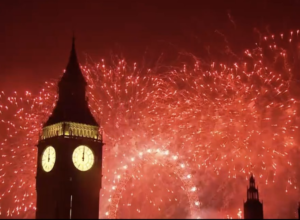
Photo of London’s New Year fireworks display from Mayor of London’s Bluesky feed.

Follow Dave Hill on Bluesky. OnLondon.co.uk is funded by sales of publisher and editor Dave Hill’s twice-weekly newsletter On London Extra. To start receiving it, become a paying subscriber to Dave’s personal Substack or follow any Support link on this site. Thanks. 

Categories: Comment

Book Review: Every Journey Matters, by Sam Mullins

At first glance, Every Journey Matters might appear daunting. It runs to 438 pages plus appendices. That won’t deter those with a specialist interest in the history of Transport for London. But neither should it put off Londoners or others curious about how London’s transport system has evolved and been delivered since the return of city government 25 years ago.

The author of this recent publication is Sam Mullins, the former director of Covent Garden’s London Transport Museum, where many a child (and, let’s be honest, many an adult too) has departed wide-eyed after encountering exhibits of actual Tube trains and buses that, then viewed close-up, can seem even larger than life. Mullins adopts a curator’s approach to his book, combining chronology with thematic chapters. The result is a great success.

By drawing expertly upon hours of interviews with pivotal figures, he brings to life events and decisions that reflect a quarter of a century of transport progress along with times of tumult and tragedy. As he puts it, the book provided an opportunity “for the movers and shakers of London’s transport to tell me their story and to tell it while it is fresh in their memories”.

The result is a rich mix of reflections and perspectives from those who were on the front line (and often below the line) at TfL, City Hall and central government. These are combined with expert academic observations to create an accessible and informative narrative with read-across into how decisions in government get made more generally.

At the same time, in parts, it reads like a political thriller. For example, in the first few chapters Mullins deals with the excitement of the return of city-wide government to London. Even some Whitehall politicians and civil servants, often resistant to sharing power, were determined to ensure the success of London’s nascent, new devolved administration. As one official put it, she and her colleagues “were reinventing the governance of the city that I lived in and loved”. The advent of a powerful directly elected Mayor and a (less powerful) London Assembly created, by British standards, novel democratic structures to which TfL would report, following years of national government control.

Mullins brings to life the way big early decisions were made by the first Mayor, Ken Livingstone, and his stakhanovite advisors about matters such as who to appoint to lead TfL, which was formed from 14 different organisations. An incumbent senior civil servant with “barrow-boy” qualities was replaced by a “terribly expensive” ex-CIA operative, Bob Kiley, who brought with him a cohort of imported North American executives.

We learn about how this new TfL leadership got to grips with delivering far-reaching policies, such as congestion charging (a remarkably brave political move), the revolution of the Oyster card system and the renaissance of London buses. We are provided with insights into how these things got done and the battles that had to be fought along the way. As one senior executive puts it, “They [the Americans] are coming in a different way, they’re bringing a different experience and they’re challenging things”.

The biggest fight with the government was over the ill-fated London Underground public-private partnership (expertly detailed in Professor Stephen Glaister’s recent publication) which ended ultimately in victory for TfL under the next Mayor, Boris Johnson. This mother of all PPPs with its “immensely cumbersome” contracts is portrayed by Mullins as a jumbled, unloved project foisted upon Livingstone. We are left in no doubt that this was a policy albatross for central government and a cause celebre for “Red Ken” and Kiley.

But it was also a huge distraction for TfL managers trying to get on with the day job. Eventually, the government allowed TfL to put in place finance for a major ten-year investment programme for the Underground and other transport infrastructure. Combined with reinvigorated leadership, this heralded something of a golden age.

Investment was the dividend of bold policy choices made by TfL. Amongst these, congestion charging is rightly singled out by Mullins. Against expectations, this controversial and politically risky IT project was delivered with breakneck speed on time and led to significant reductions in central London congestion. As one TfL leader recalls, “The whole of the British media and, I think, most politicians, bar Ken, thought it would fail.” The success of the C-Charge helped to create a foundation for Livingstone’s re-election and London, in 2005, being awarded the 2012 Olympic Games. This was perhaps the high point of Livingstone’s mayoralty (though it was followed, the very next day, by the nadir of the 7/7 bombings).

The gargantuan task of competing for and then preparing for delivery of the Olympics (ironically, largely under Johnson) was a remarkable achievement for TfL. It confounded the reputation of transport in London for being forever congested. Moreover, the Games also provided a means to help secure further long-lasting improvements to London’s infrastructure, as well as the regeneration of large parts of the east of the city.

Mullins reveals that Johnson chose to stick with TfL’s leadership, including Commissioner Peter Hendy, following his first election victory in 2008, but that it was a close-run thing. At City Hall, “Transition was very, very difficult…because basically Boris didn’t have a clue”.  At TfL, Mullins records, the Commissioner and his team, “…were treated with mistrust…you must be Ken’s person, mustn’t you, because you’ve got on with him.”

TfL dutifully went on to deliver, among other things, cycle super-highways, the “Boris bikes” cycle hire scheme and the “Boris bus”, promoted as a successor to the phased-out vintage Routemaster). As with projects pursued under Livingstone, these formed a more creative – some might say controversial – set of initiatives than could ever have been expected from central government.

With the election and subsequent re-elections of Labour’s Sadiq Khan, Mullins guides us through further transport and urban challenges that TfL has had to grapple with. These have included the implementation and enlargements of the Ultra-Low Emission Zone, the introduction of many more low traffic neighbourhoods, the advent of Uber and what Mullins calls the biggest test – managing transport services during Covid.

As with the aftermath of the 7/7 bombings, tough choices had to be made by TfL’s leaders involving weighing up very human costs and benefits that would affect their own staff and Londoners as a whole. “TfL was obliged overnight to turn from promoting the use of public transport to dissuading Londoners from travelling at all,” Mullins writes. At the same time, it had to keep the network running to allow NHS workers to commute. The damage from Covid was not limited to people. TfL’s finances were put under enormous strain, not least because the organisation became a political football. The deputy mayor for transport of the time recalls being “really genuinely worried about the existence of TfL”.

The book ends with explorations of what might have happened if TfL had not been invented and what the future might hold. There are grounds for optimism. As the book’s Afterword concludes, “The London model has proved to be a powerful force for the city’s day-to-day operation and long-term sustainability”. But there are risks ahead. Perhaps the most insidious is underinvestment in vital but politically “unsexy” transport assets that will only start to fail years from now.

Mullins’s highly readable and informative book will be enjoyed by anyone with an in interest in how London works and should be considered essential reading for Whitehall civil servants.Who knows, it just might help them understand a little better how, in the real world, successful public service delivery gets done.

Follow Alexander Jan on X/Twitter. Sam Mullins’s Every Journey Matters is available from the London Transport Museum shop and elsewhere.

OnLondon.co.uk is funded by subscribers to publisher and editor Dave Hill’s twice-weekly newsletter On London Extra. To start receiving it, become a paying subscriber to Dave’s personal Substack. Discount price until 31/12/25.

Categories: Culture

On London 2025: The Year Reviewed

The capital entered 2025 with a familiar set of strengths and weaknesses. The average Londoner was earning in eight months what his or her equivalent in Burnley earned in 12, thanks largely to the city’s “high knowledge” business sector accounting for around a quarter of all its jobs.

Yet London’s poverty rate was running at 24 per cent, representing about 2.2 million people. About one third of London children were growing up in poverty, with that percentage varying from about 12 per cent in Richmond to nearly 50 per cent in Tower Hamlets. An estimated 210,000 Londoners were homeless and living in increasingly expensive temporary accommodation, getting on for half of them children.

Here’s how 2025 unfolded against that backdrop, featuring lots of coverage by On London writers.


JANUARY

News that Sadiq Khan had received a knighthood prompted shadow home secretary Chris Philp to dismiss the honour as a “reward for failure”. It was an audacious response from the London Conservative whose party had, just a few months earlier, lost to Labour’s Khan in a mayoral election for the third time in a row and been slaughtered in a general election.

It also demonstrated two things about the Conservatives: one, they had learned nothing from their successive rejections by the electorate, including the virtue of humility; two, that they, along with the populist Right more widely, regarded Khan as the personification of everything they most disliked, not least London itself.

Crime continued to be the City Hall Tories’ chosen political battleground, with truth and reason its chief casualties. Better news was the Met’s release from the “enhanced monitoring” by His Majesty’s inspectors it had been under since June 2022.

Housing looked sure to remain a huge and complex problem, with massive waiting lists for social rented homes, housing associations struggling to build, and the Labour Mayor adjusting to the Labour government’s approach to Green Belt building. For On London, Lewis Baston drew an outline map of the capital’s shifting political loyalties.


FEBRUARY

At Imperial College, the London Growth Plan was launched, with the Mayor, his deputy for business, leading figures from London Councils, a junior government minister and On London‘s Charles Wright all in attendance. In line with the government’s top priority, it was a blueprint for restoring the capital’s productivity growth to the upward path it had been on until until the financial crash of 2008. Housing, transport infrastructure and skills training – an “inclusive talent strategy” – were prominently featured.

In London politics, Labour held four of the five seats it defended in six borough by-elections, but lost support along with one seat to the Conservatives (in Westminster). Bizarrely, though, two City Hall Tories attacked Prime Minister Sir Keir Starmer for his criticisms of Reform UK, the biggest threat to the Tories nationally. One of them, the juvenile Alessandro Georgiou, called Starmer “a Commie in a tie”. It was all very Trumpy.

Police statistics showed the London region to have one of the lower rates of violent crime, although shoplifting and theft from the person had risen since the pandemic. Also, the public consultation on the Mayor’s plans for the “transformation” of Oxford Street opened.


MARCH

Transport for London produced a compendious one-year report on the effects of the Ultra-Low Emission Zone being expanded to cover all of Greater London. It concluded that it had been a good thing, a view not shared by ex-pat self-publicist and Pimlico Plumbers founder, Charlie Mullins, who narrowly avoided being stripped of his OBE for saying on X/Twitter in 2022 that “someone should kill” the Mayor because of the anti-pollution scheme.

Trump Tory Susan Hall thought Mullins a victim of free-speech double standards. Her social media activity also included publicly backing MP Rupert Lowe in his row with Nigel Farage, which saw Lowe suspended from Reform UK, and egging on other far-Right figures. She also applauded Philp for making the false and inflammatory claim that almost half of London’s social housing is “occupied by people who are foreign”. I dismantled his ignorant allegation.

In a further example of adjusting to the Labour government’s policy approach, Mayor Khan attended the annual MIPIM property trade event in Cannes for the first time, hoping to attract more overseas investment. The context was a decidedly sluggish housing market, not helped by the slow workings of the new Building Safety Regulator, as New London Architecture’s annual tall buildings survey noted.

TfL pledged to tackle ongoing concerns about the deterioration of the bus service, with passenger numbers tumbling and average speeds in central London falling to around seven miles per hour. In happier news, the London Eye reached the age of 25 and On London joined forces with The London Society to launch a new podcast series called Talk About London.


APRIL

Following years of preparations and protests, the Silvertown Tunnel, the first new Thames road crossing east of Tower Bridge for more than 30 years, opened to traffic. The other big transport news was that book swaps at some London Underground stations were given leave to return.

Relations between London’s boroughs and City Hall, which can be scratchy at times, had been tested somewhat by a proposal from London Councils to change the capital’s 25-year-old devolution settlement to give boroughs a degree of power over mayoral decisions. Richard Brown, who was there at the Greater London Authority’s birth, took a measured view. I interviewed London Councils chair (and Lambeth leader) Claire Holland about that an other matters soon after.

In other news, Labour took by-election beatings from two directions, the London Society released a London Explained podcast about Brick Lane (researched, written and presented by me) and Julie Hamill spotted Bill Nighy on West End Lane (as you do).


MAY

A year of 25th anniversaries continued with that of the very first election for Mayor of London, which took place on 4 May 2000. Attempts to address London’s ongoing housing emergency continued too. In Greenwich, announcing the opening of the consultation on the next London Plan, Sir Sadiq Khan said he intended to “actively explore” facilitating building on Green Belt land within Greater London – a sharp change from his previous, long-held position of being resolutely opposed to this.

There was a lot more behind that headline change including, as Charles Wright wrote for On London, a “review” of the policy of giving “fast-track” mayoral approval for development schemes offering a minimum of 35 per cent “affordable” housing. There had long been calls for it to be reduced. In the days that followed, the G15 group of London housing associations reported a 66 per cent drop in the number of homes it was building – down from 13,744 starts in 2022/23 to just 4,708 in 2024/25 – and the government reduced the Mayor’s affordable delivery target for 2026 to make it more hittable.

I completed a long piece about Hackney’s Woodberry Down estate, where a huge regeneration programme had become stalled and the object of some questionable protest narratives. Think tank Centre for London’s housing summit highlighted the problem of short-term lets in central areas.

TfL reported a sharp increase in London road deaths and injuries (which isn’t what the Mayor had in mind), the long-awaited report of his London Drugs Commission recommended the decriminalisation of the possession of small amounts of natural cannabis for personal use, and Richard Brown warned that government plans for curbing immigration could hit the capital’s care homes hard and weaken its higher education sector, with ill-effects for the whole country.

The degeneration of the Conservatives continued. Their shadow justice secretary Robert Jenrick – aka “Westferry Bob” – produced a stunt video of himself challenging fare dodgers at Stratford and claiming that a “once proud” capital was going to the dogs. In reality, fare evasion was falling, Boris Johnson had had to deal with increases in it when he was Mayor, and the issue has been with us for decades.

At the end of a largely dispiriting month, it was pleasant to report the opening of the V&A Storehouse on the Olympic Park.


JUNE

An unpopular Labour government’s spending review was the big political theme. In her House of Commons speech, Chancellor Rachel Reeves made a point of snubbing London by endorsing the questionable view – questioned, indeed, even by her own assessors – that the capital enjoys preferential treatment from the Treasury and announcing funding for a bunch of transport schemes elsewhere in the country. It was the latest example of Labour policy being shaped by Fear of Farage and a capitulation to destructive “north-south divide” populism.

There was, though, a sign of hope that support for extending the Docklands Light Railway south of the Thames and into Thamesmead would eventually be forthcoming, a scheme with the potential to make possible the building of up to 30,000 new homes north and south of the river. It was clearer than ever that the capital needed all the housing help it could get. Deputy Mayor for Planning, Jules Pipe, told the London Assembly shortly before the spending review that without “enormous” public subsidy the gigantic housing targets set for London would be a mere “intellectual exercise”. Meanwhile, Trust for London calculated that London had returned to the top of the regional poverty league.

At On London, Richard Brown explored the complicated story behind London’s embrace of Pride, and Julie Hamill mourned the passing of a fellow migrant from Airdrie. The City of London confirmed its intention to redevelop the current sites of Billingsgate and Smithfield markets as part of wider regeneration programme.


JULY

It was TfL’s 25th birthday on the third of the month. Less happily, on the seventh it was the 20th anniversary of the London Bombings. Earlier, on 2 July, the government announced that London had been allocated around 30 per cent of its 10-year social and affordable housing – £11.7 billion in all – with 60 per cent of the homes to be for social rent. This was good news, though getting the homes actually built would not be straightforward.

Populist Right attacks on London continued, with Nigel Farage exploiting the killing of a young man on a street in Knightsbridge to falsely claim that “London is in a state of collapse” and crime “out of control”. In fact, Met crime statistics had been showing falls in some of the more serious street crimes compared with the previous year. City Hall Trump Tory Susan Hall provided her usual tribute act. For On London, Tim Bale set out how dire the Conservatives’ situation in London had become. In Bromley, Reform UK won a London council seat for the first time.

TfL released performance data for the first three months of the Silvertown Tunnel, saying that congestion in the area was down and bus use, up. The government’s English devolution bill included plans to restore to Londoners their right to cast a second preference vote in mayoral elections after the Tories took it away.


AUGUST

Farage’s monstering of London continued when he informed a female Sky News reporter that she wouldn’t dare walk through the West End after 9pm wearing jewellery. “You know I’m right,” he told her. The reporter, Mhari Aurora, begged to differ. That was unlikely to deter the stampede of opportunists seeking to profit from the London-is-a-hellhole social media market.

Journalist descended on the Britannia Hotel in Canary Wharf, where asylum seekers were being temporarily housed and a small group of people protesting against their presence made a lot of noise. There was a far-Right social media frenzy about a hotel resident allegedly entering a local person’s flat. There wasn’t one about that person’s daughter being charged with assaulting a hotel security guard and more. She later admitted affray and still faces other charges.

In politics, Labour suffered a heavy by-election defeat by the Liberal Democrats in Camden, demonstrating that the party of national government faces challenges from an assortment of directions. Lewis Baston reported. TfL launched a poster campaign to dissuade people from playing music and video out loud while on public transport (and not before time). Julie Hamill told the heartening London tale of a flyaway parrot called George.


SEPTEMBER

Some have termed a “scoop” – a newspaper term, I gather – my reporting that the Crews Hill area of Enfield and the part of Thamesmead in need of a DLR station were lined up to be recommended locations for New Towns in London. Pleasingly, it turned out to be true. It also added to the already rather febrile backdrop to a London Society debate about housing in the borough which I, a London Society trustee, was pleased to chair.

The promise of further movement on housing policy was detected in remarks made by Jules Pipe at a conference of planning professionals. “Immediate measures” were being worked on with the government, he said, in order to kick-start the practically non-existent supply of new housing of every kind. The Mayor, he said, would be “increasingly active” in his interventions if boroughs dragged their feet.

With most London boroughs looking set to lose out from the government’s Fair Funding Review, number crunchers at London Councils and elsewhere were doing their level best to figure out exactly why the new formula for allocating grant was so unfavourable to so much of the capital. In one of my True London podcasts – a series launched out of frustration with the avalanche of untruths being told about the city – Tony Travers enhanced my understanding of the issue.

City Hall announced that in 2024 London had met government-set legal limits for nitrogen dioxide air pollution for the first time and well ahead of schedule. For On London, Richard Derecki warned that the advent of Artificial Intelligence is having a bad effect on youth unemployment. A far-Right march in central London led by so-called Tommy Robinson attracted up to 150,000 people (Robinson claimed there were three million). I wrote some lines I thought Sir Keir Starmer ought to use in his upcoming Labour conference speech. Oddly enough, he didn’t.


OCTOBER

A BBC Panorama undercover report revealed some Met officers at Charing Cross police station to be complete turds, unfit to wear the uniform and either unaware of Sir Mark Rowley’s attempts to clean up and professionalise the service or utterly uninterested in them. It showed that, despite the end of “enhanced monitoring” by inspectors in January, there remained lots of work to do.

The emergency measures for getting homebuilding going were announced, prompting a lot of pretty low rent media commentary and a more measured, largely welcoming, response from the planning and development sector. The hope was that the planned changes would enable more planning consents to be turned into actual homes, including more of the “affordable” variety than would be the case if nothing changed. I put together an explainer.

Conservative AM Keith Prince defected to Reform UK. New figures showed London visitor numbers to have risen above pre-pandemic levels, driven largely by people coming to the city from other parts of the UK.

What else? I completed two arduous but rewarding in-depth pieces: one documenting why the City of London and the traders of Smithfield and Billingsgate markets were to part company after hundreds of years, the other unpicking a misleading claim by Tory MP Katie Lam about English language proficiency in London schools.

Also, joy of joys, my friend Denean Rowe and I fulfilled our long-held ambition to put on a special screening of My Beautiful Laundrette, complete with guided walk.


NOVEMBER 

Rachel Reeves’s budget brought warm encouragement or cold comfort for the capital, depending on how full or empty your individual glass was. The so-called mansion tax was a clunky half-measure to help Treasury finances rather than those of London’s boroughs, but the devolved “tourist tax” ought to help at local levels. Child poverty campaigners welcomed the scrapping of the two-child benefit cap, but said more action was required. Backing for the DLR extension was (quietly) bestowed at last and welcomed across the board, though the funding details were still to be confirmed.

Earlier in the month, the government’s new Index of Deprivation included, as its predecessor hadn’t, the effects of housing costs. This meant twice as many Londoners, 2.2 million, were assessed as facing income deprivation. Indices also underlined that depictions of London as being uniquely and irredeemably awash with crime are rubbish. Richard Brown went through the data.

Also in November, we learned that the Mayor was still aiming for his ambitious target of achieving “net zero by 2030” – his deputy for business, Howard Dawber, told the Centre for London conference that a positive “tipping point” was being reached. Retailer Scott Parsons was proposed as Oxford Street Development Corporation Board chair. I interviewed Teresa O’Neill, the outgoing leader of Bexley Council who had been in her job for an impressive 17 years. I exposed a huge false claim by Reform UK’s policy chief about foreigners and London social housing. And I finally completed a long piece about how Jewish Londoners were feeling two years after the start of the Gaza-Israel war.


DECEMBER

Naturally, White House gangster Donald Trump made his contribution to the mountain of lies told in 2025 about London and its Mayor, culminating in this month’s string of insults during an interview with Politico. What this showed is that Trump is losing his grip, both mentally and on popularity with US voters.

Not to be outdone, Trump’s chief UK sycophant, Farage, told viewers of GB News that Khan “is happy to celebrate every other religious festival around the world, but just not Christmas”. His remarks came not long after the Mayor had presided over the traditional lighting of the Trafalgar Square Christmas tree and a few days before Khan once again led his Christmas Carol Service at Southwark Cathedral. Go figure, as they say in the USA.

TfL’s end-of-year Travel in London report confirmed the bad news about bus speeds. And although TfL bosses struck a positive financial note when appearing before the London Assembly, Commissioner Andy Lord acknowledged an urgent need to increase ridership. Other significant Travel in London stats showed there has been no progress towards the Mayor’s 80 per cent sustainable mode trips target since before the pandemic, with cycling levels also little changed.

In the run-up to Christmas, West End footfall, in contrast to that in the rest of the country, rose. While that was happening, I was pleased to at last complete two long pieces I had been writing on and off since the late summer: one was about the history and the heroic shopkeepers of Hayes in Hillingdon; the other was about older Londoners in Camden and the city more generally.

I came out from behind my desk to enjoy the On London Christmas Party. And on Christmas Day, I made my traditional visit to my local corner shop. In many ways, its been a year of little progress. But there’s always been something to remind you why people call London the greatest city in the world.

Follow Dave Hill on Bluesky.

OnLondon.co.uk is funded by subscribers to publisher and editor Dave Hill’s twice-weekly newsletter On London Extra. To start receiving it, become a paying subscriber to Dave’s personal Substack. A discount offer applies until the end of 2025.

Categories: News

Richard Brown: Londoners’ belief in positive change could hamper Reform

London is an exceptional city. Anyone who lives or works here knows this, but its exceptionalism has been turned against it in recent years. Far-Right activists have sought to paint the capital as a hostile and misgoverned hell-hole and UK pundits such as Paul Collier and David Goodhart single London out as both the cause of the nation’s ills and a dysfunctional hotbed of cosmopolitans (“anywheres”, in Goodhart’s phrase) connected to place and each other by the weakest of ties.

Is there anything in this critique, even in its milder forms? In early December, the  government’s annual Community Life Survey was published, based on questionnaires completed earlier this year by 175,000 people in England. On some measures (feelings of loneliness, volunteering and charitable giving), the differences between London and other regions are marginal. But in three areas the capital seems to stand out.

Screenshot 2025 12 28 at 13.26.17

Out of England’s nine regions, London has the lowest proportion of people saying they feel a sense of belonging to the local area. This is most pronounced in boroughs such as Tower Hamlets and Newham. Similarly, Londoners are least likely to say that they talk regularly to neighbours, that their neighbours pull together to fix problems or that their neighbours can be trusted.

So far, so Goodhart-ian. However, while London is the lowest-scoring region, many of the lowest scoring localities are outside the capital – places such as Southampton, Reading, Boston, Mansfield, Nottingham, Crawley, Oxford and Cambridge. These are quite diverse in terms of prosperity, but share relatively large levels of population mobility – people moving in and out of the area – often because of large student populations. Weaker social ties should not be a surprise among populations that are continually changing.

Significantly, while London scores low on these indicators, it remains above average for perceptions that people from different backgrounds get on together: weak social ties do not mean hostility or intolerance. That said, some London boroughs (notably Barking & Dagenham, Bexley and Havering, a trio that will feature again in this piece) have lower than average scores for this indicator too.

Screenshot 2025 12 28 at 13.29.17

A second set of polling questions asks about relationships with place: do people think their local area is attractive, are they proud to live there, how satisfied are they overall? London is less of an outlier here, generally scoring a bit below average, more like the northern urbanised regions than the rural and small-town populations of south east and south west England.

Within London there is a consistent pattern: outer London boroughs in the north east and west of London give their local area a lower rating than the English average; Bromley and relatively prosperous riverside boroughs of south west London tend to score higher – as do other more prosperous places outside the capital. A second unsurprising finding, maybe: people who can afford to live in more affluent places tend to like them more.

More interestingly, London is a strong outlier on whether their local area has improved recently, even though positive responses to this question are scarce. Eighteen per cent of Londoners said their local area had improved as a place to live over the past two years, compared to 11 per cent of people across England (59 per cent nationwide say their area has not changed significantly one way or another, but we don’t have the regional data for this).

The 12 top scorers among nearly 300 local authorities were all in London. Waltham Forest, Southwark, Hackney, Lambeth and Wandsworth top the list, with 23 per cent or more of residents identifying positive change.

Screenshot 2025 12 28 at 13.36.38

This last finding may connect with Londoners’ relationship to local politics and public services. London as a whole had higher levels of civic engagement (from contacting councillors, to demonstrating, to responding to consultations). Londoners from across the city reported more engagement and believed they had more impact on decision-making than people living outside the capital.

Five of the ten areas with the highest participation rates were in London (Waltham Forest, Haringey, Hackney, Richmond upon Thames and Lewisham). And Londoners from across the city wanted to engage more in decision-taking (33 per cent, compared to 28 per cent across England).

Results are not uniform, and there are a few boroughs – principally Barking & Dagenham, Bexley and Havering – that buck the London trend, but the overall message is one that should give some comfort to London’s leaders. Citizens of the capital feel more engaged with the way their city is governed and more positive about the way it is changing than people in other places do.

This may partly result from the type of people who live in London (more educated and engaged in general), but could also be seen as a vote of confidence in the Mayor of London and its boroughs. The President of the United States can rant all he likes about the “terrible job” done by London’s leaders, but that’s not how it looks to Londoners.

There is a more specific relevance too, as we peer blearily into 2026. Nigel Farage has high hopes for the borough elections in May, but Londoners’ views may yet scupper these. Research by Kings Policy Institute suggests that a feeling of powerlessness over public services is strongly associated with planning to vote for Reform UK.

The flip side is that if people feel more positive about their ability to make a difference, as nearly 30 per cent of Londoners do, their likelihood of voting Reform UK should decrease. Londoners’ relative positivity about how their city is changing and their sense of civic engagement could be powerful bulwarks against change in May. Borough leaders will want to bolster both in the next four months.

Follow Richard Brown on Bluesky.

OnLondon.co.uk is funded by subscribers to publisher and editor Dave Hill’s twice-weekly newsletter On London Extra. To start receiving it at a discount rate become a paying subscriber to Dave’s personal Substack. Offer applies until the end of 2025.
Categories: Comment

John Vane: Harry Roberts, London killer

Braybrook Street, W12, is a residential road that skirts the common land of Wormwood Scrubs and the Category B prison of the same name. Six decades ago, it wasn’t unknown for inmates to abscond from “The Scrubs” with the help of getaway cars lurking in the vicinity.

It was, then, perhaps unwise of three men who had committed a string of armed robberies to be sitting in a shabby blue van parked on the street in question in the middle of an August afternoon in 1966 with a bunch of firearms to hand and no tax disc displayed.

The trio were spotted by three passing officers of the Metropolitan Police, two of whom, their suspicions aroused, stopped to have a chat with them. A few minutes later, they and their colleague were murdered. Of the three, two were shot by 30-year-old Harry Maurice Roberts, the son of Wanstead publicans whose criminal career had begun during his childhood and was interrupted only by national service in Malaya, which may have refined his aptitude for violence.

The Shepherd’s Bush Murders as they continue to be known despite taking place in East Acton not far from the local tube station, happened a fortnight after England won the World Cup at nearby Wembley. They followed that event to the top of the Swinging Sixties’ newsroom hit parade.

Roberts went on the run for almost 100 days before having his collar felt on a farm near Bishop’s Stortford. Seemingly unrepentant and unreformable, he wasn’t freed until 2014 when he was 78 and died earlier this month. But he had long since been rehabilitated by some whose moral universe accommodates the proposition that shooting unarmed officers of the law in the face or head, as Roberts did, is inherently comedic or heroic.

Football terrace chanters eager to wind up constables during the peak hooligan era hymned the cop killer as their friend to the tune of London Bridge is Falling Down. Jake Arnott, whose novel He Kills Coppers, was largely inspired by the Roberts case, has described first hearing his name chanted by anarchists at demos in the 1980s. So ubiquitous was Roberts’s celebrity that a boy I was at school with in the early 1970s, a world away from the crime scene, was nicknamed Harry because he shared the murderer’s surname.

Of course, Roberts’s brutal, selfish and terrible misdeeds caused distress and concern as well as vindictive delight. A Shepherd’s Bush funeral procession for the police victims was attended by 600 officers and a memorial service was held for them at Westminster Abbey, which Prime Minister Harold Wilson attended. The precursor to the Met’s Specialist Firearms Command was established soon after.

In 1988, the London-based Police Memorial Trust placed a remembrance stone in honour of the three officers murdered by Roberts and one of his accomplices beside Braybrook Street in the grass at the edge of Wormwood Scrubs, marking the spot where the killings took place. The victims’ names were Christopher Head, David Wombwell and Geoffrey Fox. But it is that of Harry Roberts that lives on in glorified infamy.

John Vane’s London novel Frightgeist in available here and only here. Photograph by Chrisfow, 2007.

Categories: John Vane's London Stories

Merry Christmas 2025!

Just back from traditional Christmas Day visit to legendary local corner shop. Mulled wine was consumed, season’s greetings were exchanged, lollipops for grandchildren were obtained. There’s no Christmas like a London Christmas!

Categories: News